


8 Machu Picchu Facts You Didn’t Know
- 21 May, 2026
- by Konsti Sobon
Machu Picchu - a remarkable Inca citadel built without wheels or mortar, engineering earthquake-proof structures, water-works, and eternal mystique.
Read more
August represents the golden finale of the peak dry season in the Peruvian Andes, offering some of the most dependable, sun-drenched weather of the year. If you’re scheduling your trip to the ancient Inca sanctuary during this month, expect crisp mountain mornings, deep blue skies, and strong panoramic visibility. Because August delivers such reliable conditions, it also marks the height of the international summer vacation rush, so smart timing, wardrobe planning, and early logistics matter.
This guide covers what to prepare for, from day-to-night temperature drops to the differences between alpine Cusco and the humid cloud forest.
August is a strong month to explore Machu Picchu, the tail end of the Andean dry season, with long stretches of sunshine and clear skies. Because the sanctuary sits in a microclimate between the high mountains and the Amazonian cloud forest, planning your schedule and choosing the right Machu Picchu circuit still matters.

A typical August day features comfortable daytime highs averaging 19°C (66°F) and cold nighttime lows dropping to 7°C (44°F).
Statistically, August is one of the driest months of the year in the region, so heavy downpours are unlikely to interrupt your visit. The Andes remain unpredictable, though, and brief pockets of mountain mist can sweep through the canyon at any time. Keep a lightweight, packable rain jacket in your daypack as a backup.
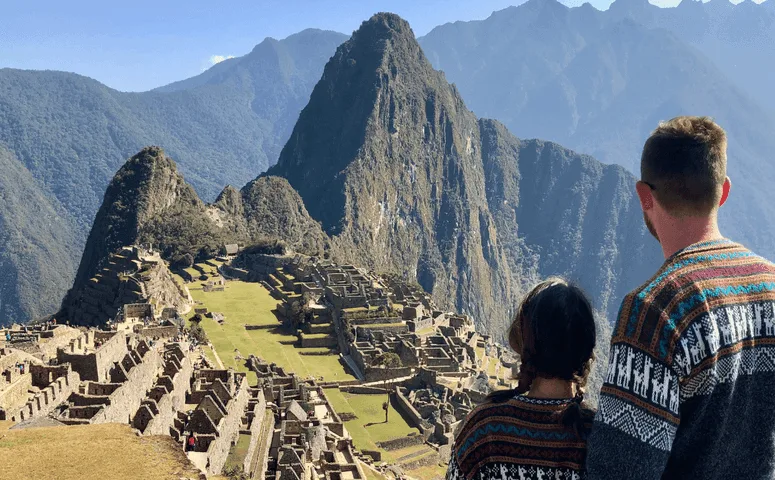
August has some of the highest frequencies of clear days all year, making it a strong month for unobstructed photographs.
You may see sources cite an average relative humidity near 100% for August. Independent climate records don’t fully agree on the exact monthly figure, some report values in that range, others notably lower, but the widely cited benchmark for the dry season overall (roughly April through October) is closer to 77%, rising toward 91% in the wettest months. Whatever the precise number, the practical effect is the same: intense morning thermal vapor rises off the Urubamba River canyon at dawn, creating a dramatic blanket of mist over the ruins that typically burns off by around 9:00 AM, revealing clear skies underneath.
To compare weather baselines and trail conditions across other months, see our master guide on the weather at Machu Picchu.
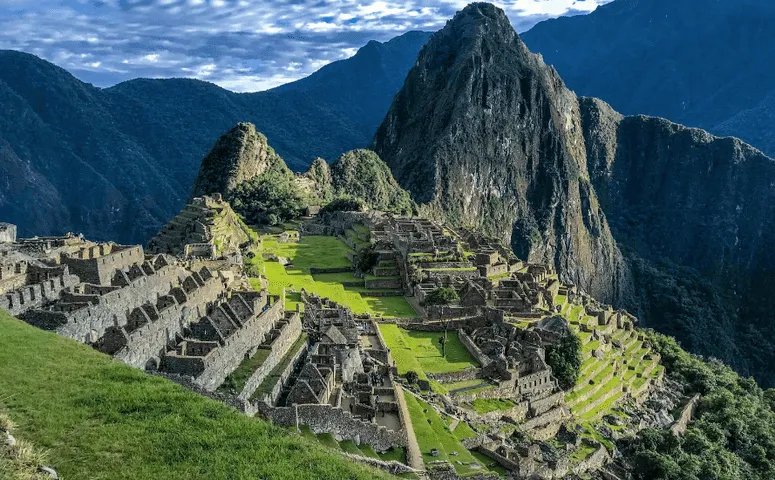
Visiting in August means balancing some of the most reliable weather of the year against peak international travel season.
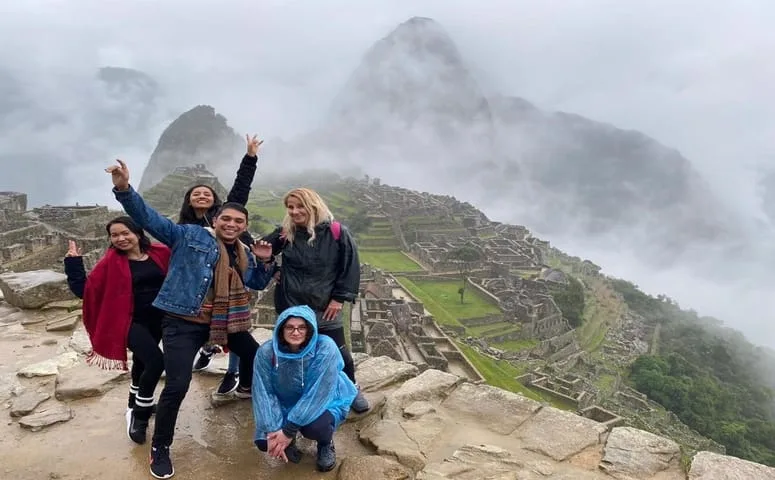
Our take. With advance planning, August’s logistical challenges are manageable, and the payoff of reliably clear skies makes it one of the strongest months to see the citadel.

Getting the timing and preparation right makes a real difference in August. Here are five recommendations:
The best windows for entering in August are early morning (6:00 AM to 8:00 AM) or late afternoon (3:00 PM to 5:00 PM). Dawn entry lets you watch the morning mist burn off under cool air; late afternoon is quieter, since most day-trippers have already headed back to the train station.
With temperatures swinging from a morning low around 7°C (44°F) to an afternoon high around 19°C (66°F), pack breathable base layers, a fleece or lightweight sweater, and a packable windbreaker or light rain shell. High-SPF sunscreen, polarized sunglasses, and a wide-brimmed hat matter too, since the high-altitude sun is intense in August.
August is peak season, so last-minute planning is risky. Book entry tickets, train seats, and accommodations at least 3 to 4 months ahead.
Machu Picchu holds architectural and historical detail that isn’t obvious without context. Our Machu Picchu tour from Cusco pairs you with a private guide who handles the checkpoint logistics and explains the site’s astronomical alignments.

Rather than staying in high-altitude Cusco immediately on arrival, head to the lower Sacred Valley for your first 48 hours to let your body adjust before heavy walking or trekking. See our guide on altitude sickness and how to avoid it.
Packing for August means preparing for the contrast between sun-drenched days and cold mountain evenings. Cross-check with our full Machu Picchu packing list before you finalize your bag.

Under direct August sun you’ll likely be comfortable in a light shirt, but a real chill sets in once cloud cover passes or the afternoon wind picks up. Your daypack should include:
The sanctuary involves uneven stone steps, gravel paths, and exposed ridges. Broken-in, water-resistant hiking shoes or trail runners with deep rubber traction matter, especially if you’ve booked one of the mountain climbs. See our comparison of the differences between Huayna Picchu and Machu Picchu Mountain if you’re still deciding.
Visiting Machu Picchu in August is a strong trade-off: the near-absence of rain and cloud cover rewards you with high-contrast, clear-sky views that make photography and exploring genuinely enjoyable, and it’s one of the best windows for multi-day treks like the Inca Trail or Salkantay.

The trade-off is sharing the site with other travelers during one of the busiest months. Booking permits months ahead matters most if you’re adding a climb up Huayna Picchu or Machu Picchu Mountain.
Once you’ve got August’s weather patterns sorted, see why you should combine the Sacred Valley with Machu Picchu for a smoother, better-acclimatized route.

Yes, August is one of the best months to visit Machu Picchu, sitting at the heart of the dry season with a high frequency of clear, sunny days and minimal rain. The trade-off is that August is also the peak of international summer travel, so coordinate permits and logistics well in advance.
Expect sunny days and cool nights, with daytime highs averaging around 19°C (66°F) and nighttime lows dropping to about 7°C (44°F). Climate records diverge on the exact humidity figure for August specifically, but the dry-season benchmark generally cited is around 77%, with skies staying mostly clear despite the moisture.
Target either the early morning window (6:00 AM to 8:00 AM) or the late afternoon slot (3:00 PM to 5:00 PM) for a calmer visit. Morning entry lets you see the mist lift off the ruins, while late afternoon is quieter once day-trippers have left. Because demand is high, book circuits, trains, and guides 3 to 4 months ahead.
Pack breathable base layers, an insulating fleece, and a light windproof jacket for August’s temperature swing. Add sturdy hiking shoes, a sun hat, UV sunglasses, high-SPF sunscreen, insect repellent, a power bank, and small denominations of Peruvian soles.
Yes, August offers strong hiking conditions with dry, stable trails free of the mud common in wetter months. Because conditions are so reliable, permits for the Inca Trail and alternatives like the Salkantay or Lares treks sell out many months ahead, so reserve early.

Gerardo20 July, 2026 at 9:40 pm
Muchas gracias por los consejos que das a los viajeros que van a ese hermoso y místico lugar , ayuda mucho 🙏😉👍
Mason Brown4 December, 2024 at 11:48 am
Such a helpful guide for planning a trip to Machu Picchu in August! 🌞❄️ Knowing about the warm days and chilly nights makes it so much easier to pack the right clothing. Thanks for providing such practical and detailed tips-it’s exactly what travelers need for an unforgettable experience!
Oliver from Exploor4 December, 2024 at 12:39 pm
Hey Mason, thank you so much for your kind words! I’m thrilled you found the guide helpful for planning your trip to Machu Picchu in August. Wishing you an unforgettable adventure at this magical destination-safe travels and feel free to reach out if you have any more questions or need anything!