

What Does a 2026 Machu Picchu Trip Cost?
- 21 May, 2026
- by Erik Krause
A typical trip to Machu Picchu in 2026- including entrance, train, bus, lodging and guide - costs roughly USD 250-450 per person.
Read more

A must-do excursion for any traveler is to visit the Sacred Valley and Machu Picchu in Peru, a nation rich in history, culture, and natural beauty. Anyone who visits these two locations will have a one-of-a-kind and spectacular experience that will leave a lasting memory.
The beautiful Andean region known as the Sacred Valley is home to numerous indigenous settlements and historic ruins. It is a location of profound spiritual meaning for the Incas and provides a window into the way of life of the Andean people in its traditional form.
Machu Picchu, on the other side, is one of the most recognizable and well-preserved ancient cities in the world. It offers a fascinating look into the culture and history of the Incas and is a tribute to their engineering and architectural prowess.
In the following, we’ll tell you more about the two sites and why combining Sacred Valley and Machu Picchu is not just a “good” idea but rather a must-do. Let’s dive in!

Beautiful and historically significant, the Sacred Valley provides a rare look into the life and times of the pre-Inca society. Numerous indigenous communities and historic ruins may be found in the valley, which is situated in the Andes mountain range.
The valley has a rich history, dating back to the Inca Empire. The Incas believed that the valley was a sacred place, and it played an important role in their religious, agricultural, and administrative practices. Given that it was the primary road from Peru’s highlands to the lowlands of the jungle, the valley was also a key strategic position for the Incas.
In the following, we’ll take a look at some of the most important sites in the Sacred Valley.

The Pisac ruins are one of the Sacred Valley’s top tourist destinations. These ruins are known for their spectacular terraced agricultural systems, as well as its religious and governmental structures, and they are situated on a mountaintop overlooking a valley. From here, it was easy for the Incas to spot their enemies.
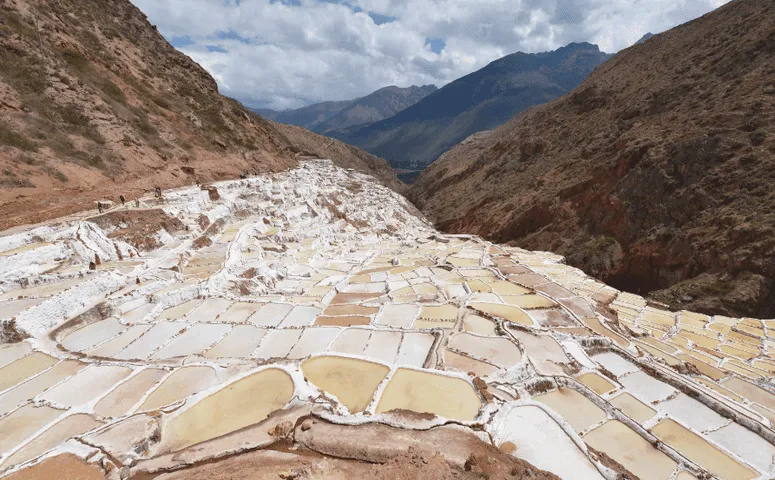
The salt mines of Maras is another major attraction. They are known for their over 5000 unique salt mines that were used by the Incas for salt production.

Moray is one of the most astonishing sites in the Sacred Valley and one of Peru’s must-visit ruins. The Incas built several agricultural terraces there, each one at a different temperature, which allowed them to study the effects of different climates on crops. It’s known as the “Inca laboratory”.

Apart from these sites, there is a lot of natural beauty in the valley, e.g. snow-covered mountain peaks, rivers and beautiful crop fields. This beauty along with its rich history and culture make it a must-visit destination when in Cusco. Our Sacred Valley tour includes Maras, Moray, Ollantaytambo and is top-rated on TripAdvisor. After having visited Ollantaytambo, the last site of the tour, we offer the option to return to Cusco or to be dropped off at the Ollantaytambo train station so you can take the train to Machu Picchu and spend the night there. More about this in a bit.
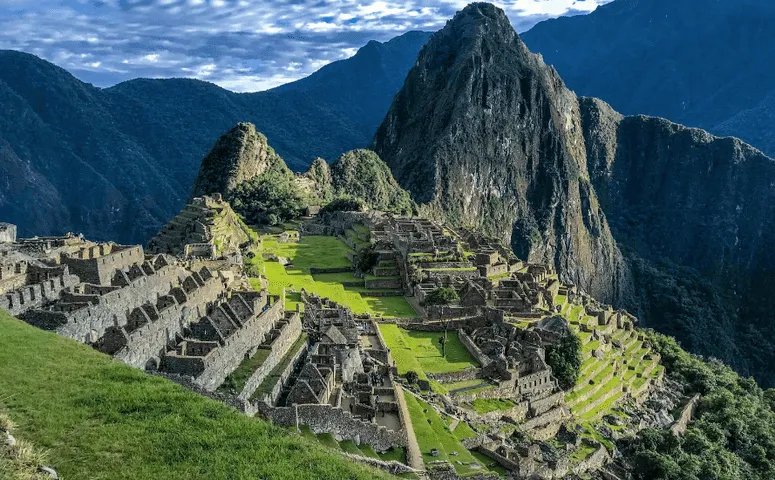
Machu Picchu is an ancient Inca citadel located in the Andes mountains of Peru. It’s considered one of the most iconic and well-preserved ancient cities all over the world.
Peru’s most popular tourist attraction was originally built in the 15th century and was later abandoned. Thus it remained unknown until its rediscovery by Hiram Bingham, an American explorer and archaeologist, in 1911.
Bingham was searching for the “lost city of the Incas” when he stumbled upon Machu Picchu. According to stories, he was led to the site by a local farmer for a small tip who had known of its existence for generations. His discovery sparked a global interest in Machu Picchu and led to further excavations and studies of the site.

Machu Picchu leaves its visitors speechless due to its impressive architectural and cultural features. The city’s architectural design, which is defined by its precise stone masonry and use of terracing, is situated on a mountain crest.
It is divided into two main sections: the agricultural sector and the urban sector. Whereas the agricultural sector includes terraced fields, the urban sector includes the most important religious and administrative buildings. Some of the city’s spectacular temples and shrines are the Temple of the Sun and the Temple of the Three Windows.
In fact, the real purpose of the site is still not entirely clear until today. Modern researchers hold varying views, claiming that in addition to being a royal estate, it was also used as a religious place, a trading hub, a center for astronomical observatories, and more. Its location, high in the Andes, made it difficult to reach and helped protect it from invaders.
Apart from that, there are more interesting Machu Picchu facts that will interest you.
Visiting the Sacred Valley first and Machu Picchu afterwards is what we do in our 2-day Machu Picchu tour and our travelers love it. Here’s why.
The Incas lived in the Sacred Valley before constructing Machu Picchu. Thus, it makes sense to visit in chronological order to completely understand their history.

When combining these two sites, you will take the train to Aguas Calientes (Machu Picchu town) after your Sacred Valley tour and spend the night there. This allows you to enter at 6:00 am, as soon as the gates open up in the morning.
If you start the tour from Cusco or from the Sacred Valley taking the first train to Machu Picchu at 5:05 am in the morning, you will reach Aguas Calientes at 6:50am. Once you get to the train station in Aguas Calientes, you’ll have to wait in line for the shuttle bus, take the bus to the entrance and wait at the entrance. As you can see, you definitely won’t be able to enter as early as when spending the night in Machu Picchu town.
The option to enter as early as possible is great during the dry season, from April/May to October, as this way you can witness the sunrise. In the wet season, on the other hand, entering in the afternoon is a fantastic option, as there aren’t any crowds and it most likely won’t be as misty as in the morning.
Remember, however, that the weather at Machu Picchu can be unpredictable and you should be prepared for everything.

Combining the Sacred Valley and Machu Picchu with an overnight stay in Aguas Calientes will allow you to spread the hours of traveling over two days. This makes the trip a lot more enjoyable than doing it all at once.Don’t get me wrong, doing the Machu Picchu 1-Day Tour is definitely doable and it’s your best bet if you don’t have a lot of time. However, if you do have the time, we recommend combining it with the Sacred Valley and spreading it over two days.
Let’s take a closer look at both options regarding the time spent traveling so you can see the difference.
Cusco to Ollantaytambo train station: 1h 30min
Train from Ollantaytambo to Aguas Calientes: 1h 45min
Shuttle bus to Machu Picchu: 30 min
Return shuttle bus to Aguas Calientes: 30 min
Train from Aguas Calientes to Ollantaytambo: 1h 45min
Ollantaytambo train station to Cusco: 1h 30min
Total time spent traveling on day 1: 7h 30 min
Cusco to Ollantaytambo train station: 1h 30min
Train from Ollantaytambo to Aguas Calientes: 1h 45min
Total time spent traveling on day 1: 3h 15min
Shuttle bus to Machu Picchu: 30 min
Return shuttle bus to Aguas Calientes 30 min
Train from Aguas Calientes to Ollantaytambo: 1h 45min
Ollantaytambo train station to Cusco: 1h 30min
Total time spent traveling on day 2: 4h 15 min
As you can see, the first option is a lot more exhausting, especially considering that the Machu Picchu tour takes 2-2.5h. All of our Machu Picchu tours include private transportation, all entrance and shuttle bus tickets and our expert guide.
Undoubtedly, both places are must-do when in Cusco. They do not only convince travelers because of their natural beauty but also because of their cultural, historical and archaeological wonders.
Combining both sites guarantees a truly enriching experience, as you learn about the Inca’s culture and history chronologically, avoid the crowds in high season and enjoy a more relaxed travel experience.
For an unforgettable time in the country of the Incas visiting more than just the Sacred Valley and Machu Picchu, we recommend you take a look at our Peru tours.
Combining the Sacred Valley and Machu Picchu in one trip creates a smoother and more efficient route through the region. You visit important Inca sites in a logical order, usually starting in the Sacred Valley, then continuing by train to Machu Picchu. This reduces repeated travel between Cusco, the Sacred Valley, and Aguas Calientes, saves time, and lets you experience more in the same number of days.
Most travelers benefit from visiting the Sacred Valley before Machu Picchu. Many parts of the Sacred Valley sit at a lower altitude than Cusco, which gives your body time to adjust before going to higher points. You can explore Pisac, Ollantaytambo, and other sites at a more comfortable pace, then continue to Machu Picchu when you feel better acclimated. This order also matches the natural flow of train routes that run from the Sacred Valley to Aguas Calientes.
A common plan is 2 to 3 days for the Sacred Valley and Machu Picchu together. Many itineraries include one full day in the Sacred Valley, visiting key sites and staying overnight in the valley or Ollantaytambo. On the next day, you take an early train to Aguas Calientes and visit Machu Picchu. If you have more time, adding an extra night lets you explore more sites or enjoy a second entry to Machu Picchu.
A typical route starts in Cusco, continues to the Sacred Valley, then ends in Machu Picchu. Many travelers visit sites like Pisac, Moray, Maras, and Ollantaytambo on the first day. From Ollantaytambo, you take the train to Aguas Calientes, then go up to Machu Picchu for a guided visit. After your time at Machu Picchu, you return by train to Ollantaytambo or straight back to Cusco. This route keeps travel times logical and avoids unnecessary returns.
Booking a combined tour simplifies logistics and reduces planning stress. Train tickets, entrance tickets for Machu Picchu, transfers, and guides are coordinated in one itinerary. This helps avoid issues such as sold-out train times or entry slots and makes it easier to time your visit to Machu Picchu. You also get a clear schedule that links Sacred Valley visits with train departures, which is helpful if you have limited days in Peru.


Adam Stanfield22 August, 2023 at 12:12 pm
A friend told me about the combination of the Sacred Valley with Machu Picchu and he said it was so good because he has learned a lot about the culture and history of the INcas and that helped him to better understand the new wonder of the world.
I will definitely add this tour to our list.
Konsti from Exploor Peru23 August, 2023 at 2:23 am
Hi Adam,
thank you very much for your comment. Exactly, your friend made a good decision then and we can only recommend you to do the same. Because the knowledge you will gain during our tour of the Sacred Valley will help you a lot to understand Machu Picchu.
If you have any further questions, please feel free to contact me.
Best,
Konsti
Tomasz H.28 May, 2023 at 3:28 pm
I’m interested in this tour for me, my wife and her sister for end of June. Could you send us a quote to my email please?
Oliver from Exploor29 May, 2023 at 10:35 am
Dear Tomasz, thank you very much for your comment. Our travel advisor Erik just sent you an email with more information. Please check your inbox.
Have a great day,
Oliver