Key Takeaways
- The best time to hike the Inca Trail is during the dry season, from May to September, when there is less rain and clearer mountain views.
- April and October are good shoulder months, with fewer crowds and still mostly stable weather on the trail.
- The Inca Trail is closed every February for maintenance, so it is not possible to hike the classic route during that month.
- Permits for the Inca Trail are limited and sell out months in advance for high season, so early booking is essential to secure a spot.
- Your choice of month should balance weather, trail conditions, crowds, and personal preferences such as photography, budget, and tolerance for rain or cold nights.
Peru’s Inca Trail has managed to become not only the most popular trek in the country of the Incas but one of the most demanded ones in all of South America. With its unique mix of ancient ruins, fascinating history and beautiful Andean mountain landscape leading you to Machu Picchu, it attracts trekking lovers from all over the world.
As Peru managed to become one of the most visited countries in South America, planning your trip in advance has become crucial. This also holds true for the Inca Trail. Knowing the best time to do the Inca trail is very important so you can plan accordingly and make the most out of your tour to Machu Picchu.
Best Time to Do the Inca Trail to Machu Picchu
The best time to do the Inca Trail is May and October. May is our favorite month because it’s shortly after the rainy season and shortly before high season, so the landscapes are still green and it’s not that crowded yet.

On your 4th day and after 45 km (28 miles) you will reach Machu Picchu.
A good alternative is October. Even though rainfall might be higher, conditions still tend to be very good and as the high season wears off, there won’t be big crowds around anymore. Both months, May and October, are warmer than the peak months June, July and August.
Regardless of which month you choose to do the Inca Trail, you should always remember that Machu Picchu and the surrounding landscapes visited during the Inca Trail are located in high elevation territories. This means that weather in Cusco can change very quickly and you have to be well prepared. Let’s have a closer look at the wet and the dry season next.

Monthly temperature and rainfall overview in Cusco, Source: https://www.ncdc.noaa.gov
Wet Season vs. Dry Season
Inca Trail Wet Season
Cusco’s rainy season tends to start in mid November and continues to the end of March. In these months, the number of tourists on the trail is significantly lower than in dry season which makes it more appealing for some trekkers.
In November, the conditions are usually still more than fine to do the trek and demand isn’t that high. Heavier rainfalls tend to start in December, whereas January and February are by far the rainiest months (especially February).
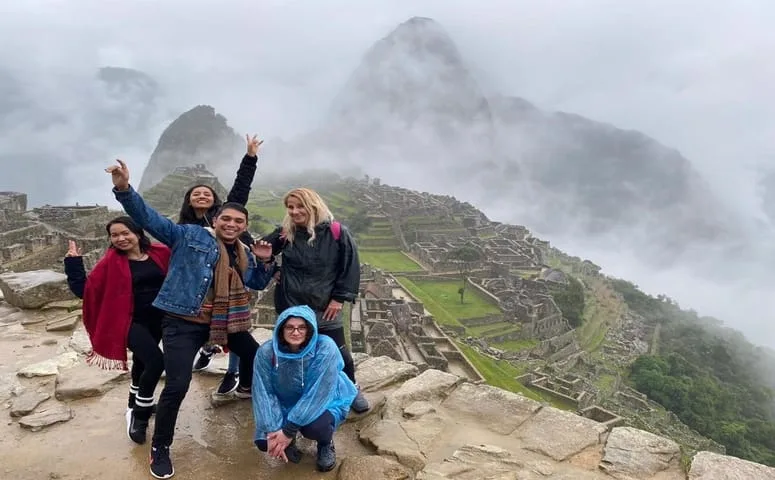
The weather in the Peruvian highlands might change rapidly. That’s why it’s important to pack the right things for your Inca trail tour.
In February, the Inca Trail is closed due to maintenance. However, Machu Picchu remains open for visitors. The beginning of March can also still be rather rainy, but the rest of the month is similar to December meaning that you can have rain almost every day, but not a lot at once.
In April, the change from wet season to dry season takes place and the weather becomes better gradually. However, it’s still possible that there are light rainfalls.
Inca Trail Dry Season
The dry season in the Andean mountains is from May to October. During these months you can expect a lot of sunshine and blue skies. May and June tend to be warm and dry months that offer green landscapes, as the rainy season ended shortly before.
The demand for Inca Trail permits increases significantly, especially from April to August due to good weather conditions and vacations in other countries. The permits can sell out more than half a year in advance, so make sure to plan your trip accordingly.

During your guided Machu Picchu tour, you’ll see over 150 buildings.
These are the busiest months in Cusco not just because of vacations but also because of national holidays, such as Inti Raymi (the Festival of the Sun) in June and Peru’s national holiday in July (28th of July). So apart from international travelers, a lot of locals visit the city of the Incas.
In general, from July to October the air is drier, temperatures are cooler and landscapes aren’t as green as in May or in June.
Trekking Options: 2- & 4-Day Tour
Depending on the amount of time you have in Cusco, you can decide between the 2-day or the 4-day Inca Trail to Machu Picchu. The short version starts at Km 104 of the railway and includes trekking on the Inca Trail on the first day. Make sure to check out the different trails and our Salkantay Trek vs. Inca Trail comparison!
You will see Machu Picchu from the Sun Gate Inti Punku, the official end of the Inca Trail and one of the most incredible places to take photos of Peru’s highlight. Afterwards, you’ll spend the night in a hotel in Aguas Calientes (Machu Picchu town) and have your guided Machu Picchu tour on the second day. Check out our Machu Picchu Travel Guide for more information.

Terraces were used for farming at Machu Picchu.
The 4-day trail, which is the classic version, begins close to Ollantaytambo at Km 88 on the way from Cusco to Machu Picchu. It’s a 40 km (24 miles) trek where you pass the tropical cloud forest, beautiful Inca ruins and camp in some of the most picturesque parts of Cusco’s mountain range. During this tour, you will enter the Machu Picchu complex on the fourth day through the Sun Gate Inti Punku, offering you some unforgettable views which normal tourists don’t get to experience.
The maximum number of permits available per day for the 4-day Inca Trail is 500, but out of those only 200 are for tourists. The rest is for guides, porters and chefs. For the 2-day tour, the number of daily permits is 250.

Did you know that no wheels were used to transport heavy rocks for the construction of the Inca city?
As the Inca Trail is a very popular option, the demand for the trail is often so high that it’s impossible to get a permit. That’s why many travelers opt for an alternative hike, such as the Salkantay Trek.
Inca Trail Packing List
As mentioned before, apart from being prepared for all kinds of weather conditions there are some essentials that you should pack no matter when you’re doing the Inca Trail.
All agencies bring porters on the tour that will carry your things in a duffle bag. Normally the allowed weight is around 5 kgs, which is more than enough for 4 days. You can put the rest of your belongings in your backpack.
Some essential items on the Inca Trail packing list are:
- A hiking backpack
- Trekking clothes, such as light trekking boots with good ankle support, sneakers or sandals for comfort while in camp, warm clothes (fleece and layers for different temperatures, especially at night), rain gear/waterproof clothes, thermal underwear, t-shirts and trekking pants, gloves/mittens, scarf, 3 pairs of wool socks, wool hat for cold nights
- 3 plastic bags to separate your clothes (clean, wet, dirty)
- Flashlight, head lamp and camera (with extra batteries)
- Small binoculars and sunglasses
- Sun block SPF 30+, lip balm and insect repellent (lotion better than spray)
- Swiss army knife
- Toiletries, toilet paper and personal hygiene items
- Personal medicine, medicine for altitude sickness and anti blister gel
- Refillable water bottle and plastic bags (ziploc)
Inca Trail - Always Great, but Best in May/October
Cusco’s Inca Trail is a great option for trekkers, no matter if you’re short on time and choose the 2-day tour or if you go for the classic 4-day Inca Trail.
Apart from how many days you have available, it’s crucial to remember that you have to book your Inca Trail permits minimum 6 months in advance. Also, you have to consider the respective weather in the month of your tour so you can prepare accordingly.

On your last day you’ll reach Machu Picchu via the Sun Gate. From there, you can enjoy a spectacular view over the “lost city of the Incas”
In our opinion, the best month to do the Inca Trail to Machu Picchu is May, as this month offers good temperatures, no crowds and green landscapes which are beautiful to look at. June, July and August are the most crowded months, January and March tend to be the ones with the most rain which is why we recommend avoiding them. October is a great alternative to May as general conditions are similar and it’s even a bit warmer.
In the end, we are convinced that the experience will always be a very unique one, regardless of the month you end up choosing. If you’re looking for a tour to do before starting the Inca Trail, our Sacred Valley tour would be a great option.
Frequently Asked Questions About the Best Time to Do the Inca Trail
When is the best month to hike the Inca Trail?
The best months to hike the Inca Trail are usually June, July, and August, which fall in the dry season. During these months, you can expect more sunshine, clearer views of the Andes, and less chance of heavy rain on the trail. Nights can be cold, but most travelers prefer dry paths and steady weather to reach Machu Picchu.
Is there a rainy season on the Inca Trail?
Yes, the rainy season on the Inca Trail usually runs from November to March. During this time, you can face heavy showers, muddy and slippery paths, and more cloud cover that can block mountain views. Some travelers still choose these months for lower crowds and more flexible last-minute bookings, but they need to be ready for wet gear and less stable conditions.
Is the Inca Trail open all year round?
The classic Inca Trail is open most of the year, but it is closed every February for maintenance and conservation. Authorities use this month to repair sections of the trail, manage erosion, and protect the route from overuse. If you plan to travel around February, you can still visit Machu Picchu or choose alternative treks, but you cannot hike the classic Inca Trail route.
How far in advance should I book the Inca Trail in high season?
For high season dates, especially from May to September, you should book the Inca Trail at least 4 to 6 months in advance. Permits are limited to a fixed number per day and can sell out quickly, especially for June, July, and August. Early booking gives you a better choice of departure dates and time to plan flights, hotels, and acclimatization days in Cusco or the Sacred Valley.
What are the pros and cons of hiking in the shoulder months?
The shoulder months, mainly April and October, offer a good balance between weather and crowds. In April, the landscape is still green from the rainy season, and the weather starts to stabilize with less frequent showers. October also has mild conditions before the heavy rains return, and trails are usually less crowded than in peak winter months. The trade-off is a slightly higher chance of scattered rain, but many travelers find the quieter paths and softer light for photos worth it.






marcela26 December, 2022 at 5:43 pm
hola, como están. abierto en febrero me gustaría ir para el 11 de febrero-
gracias!!!
Claudia10 July, 2022 at 8:17 pm
Hola! Me pasan info para mayo/2022? Gracias!!
Chris5 September, 2021 at 9:48 am
Hey Exploor team, I’m interested in booking the 4-day Inca trail with you for April 2022. Just sent you a DM, please check
Oliver from Exploor6 September, 2021 at 8:54 pm
Hey Chris! Thank you for your message, we already sent you all the details. We’d love to have to you on board for next year 🙂 All the best from Peru, Oliver