Cusco Weather at a Glance
Cusco (also spelled Cuzco) sits at about 11,150 feet (3,400 meters), and that altitude shapes much of Cusco’s climate. Days are mild all year, with average highs of about 69 to 72°F (20 to 22°C). Nights are cold, and the coldest come in June and July, when average lows drop to about 34 to 35°F (1 to 2°C).
Seasons here are defined by rain, not by heat. The dry season runs from May to September. April and October are shoulder months, and the rainy season runs from November to March.
January is the wettest month, with about 6.0 inches (153 mm) of rain on average.
- Two main seasons: dry from May to September, rainy from November to March, with April and October in between.
- Cold nights all year: average lows sit between 34°F (1°C) and 46°F (8°C) depending on the month.
- Strong sun at altitude: thin air lets more UV through, so you burn faster. Midday can feel hot even after a cold morning.
- Layers beat a heavy wardrobe: one day can bring a cold start, T-shirt weather at noon and a chilly evening.
- Lower areas are warmer: the Sacred Valley and Machu Picchu sit lower than Cusco and usually feel milder.
Cusco Weather by Month
Average Temperatures and Rainfall in Cusco (Table)
Monthly averages from the Cusco airport weather station, with temperatures in °F (°C) and rainfall in inches (mm).
| Month | Avg high °F (°C) | Avg low °F (°C) | Rainfall in (mm) | Rainy days | What it feels like |
|---|
| January | 69 (21) | 46 (8) | 6.0 (153) | 20 | Wettest month, green and showery |
| February | 69 (20) | 46 (8) | 5.2 (132) | 17 | Wet, mild days, cool nights |
| March | 69 (21) | 46 (8) | 4.2 (106) | 16 | Rain easing but still frequent |
| April | 70 (21) | 43 (6) | 1.5 (38) | 7 | Drying out, hills still green |
| May | 70 (21) | 38 (4) | 0.3 (7) | 2 | Dry and sunny, nights turning cold |
| June | 69 (21) | 35 (2) | 0.1 (3) | 1 | Clear days, near-freezing nights |
| July | 69 (21) | 34 (1) | 0.2 (6) | 1 | Coldest nights, clear skies |
| August | 71 (22) | 37 (3) | 0.3 (7) | 2 | Dry and sunny, cold nights |
| September | 71 (22) | 41 (5) | 0.7 (18) | 4 | Mostly dry, nights less cold |
| October | 71 (22) | 44 (7) | 2.1 (55) | 9 | Showers start to return |
| November | 72 (22) | 46 (8) | 3.0 (77) | 10 | Warmest days, rainy season begins |
| December | 70 (21) | 46 (8) | 4.9 (125) | 17 | Wet, frequent showers |
| Year | 70 (21) | 42 (6) | 28.7 (728) | 106 | Mild days, cold nights |
Source: Cusco airport weather station averages, station elevation 10,659 feet (3,249 meters). Temperatures are rounded to whole degrees from the station data, so the same °F can show a different °C.
January
January is the wettest month in Cusco, with about 6.0 inches (153 mm) of rain over 20 rainy days. Highs average 69°F (21°C) and lows 46°F (8°C), so it is wet but not cold by Cusco standards.
Plan city walks and short tours for the morning and keep a rain jacket in your daypack. If you are heading to Machu Picchu in January, read our month guide for the citadel itself.
February
February is still firmly in the rainy season, with about 5.2 inches (132 mm) of rain over 17 rainy days. Highs average 69°F (20°C) and lows 46°F (8°C), among the mildest nights of the year. High-altitude trails can be wet and muddy, so pack waterproof shoes and a rain layer for every outing.
Expect showers on most days and slippery cobblestones in the historic center. Showers usually arrive later in the day, so we schedule early starts. The upside is that the hills are at their greenest and the city is quieter than in the dry months.
March
March brings about 4.2 inches (106 mm) of rain over 16 rainy days, with highs of 69°F (21°C) and lows of 46°F (8°C). Rain is easing but still frequent, and the landscape stays green. Keep a light rain jacket handy and save museum visits for wetter afternoons.
April
April is a shoulder month and the turning point of the year. Rain drops to about 1.5 inches (38 mm) over 7 rainy days, while highs reach 70°F (21°C) and lows fall to 43°F (6°C). You get green hills with far fewer wet days, which makes it a good month for photography.
May
May opens the dry season, with about 0.3 inches (7 mm) of rain over just 2 rainy days. Highs average 70°F (21°C), but lows drop to 38°F (4°C), so nights are noticeably colder than in April.
Clear skies make May a strong month for the Sacred Valley and high-altitude day trips. Pack a warm jacket for evenings and pre-dawn pickups.
June
June is dry and sunny, with about 0.1 inches (3 mm) of rain over 1 rainy day. Highs average 69°F (21°C) and lows fall to 35°F (2°C), so bring gloves and a beanie for evenings and early starts.
Inti Raymi, the Sun Festival, is held every June 24 at Qorikancha, the Plaza de Armas and Saqsaywaman. The city is very busy around the festival, so book hotels and tours ahead.
July
July has the coldest nights of the year, with average lows of 34°F (1°C) and highs of 69°F (21°C). Rain is rare, at about 0.2 inches (6 mm) over 1 rainy day. Dress for winter after dark and for spring at noon.
August
August stays dry, with about 0.3 inches (7 mm) of rain over 2 rainy days. Highs climb to 71°F (22°C) and lows average 37°F (3°C). It is one of the busiest travel months.
Pre-dawn trips such as Humantay Lake start in the coldest hours, so dress warmly.
September
September is the last month of the dry season in Cusco. Rain stays low at about 0.7 inches (18 mm) over 4 rainy days. Highs average 71°F (22°C) and lows rise to 41°F (5°C), so nights are milder than in July.
Crowds usually thin out after the June to August peak, and skies stay mostly clear. It is a strong month for full-day trips like the Sacred Valley, Humantay Lake and Rainbow Mountain.
October
October is a shoulder month, with about 2.1 inches (55 mm) of rain over 9 rainy days. Highs average 71°F (22°C) and lows 44°F (7°C), so nights are milder than in the dry season. Mornings are often clearer, so we plan the main stops early.
Keep the afternoon flexible. Pack a rain jacket and sun protection, since you may need both on the same day.
November
November has the warmest days of the year, with highs averaging 72°F (22°C) and lows of 46°F (8°C). The rainy season begins, bringing about 3.0 inches (77 mm) over 10 rainy days.
From now through March, carry a light rain jacket every day. November still has far fewer rainy days than December to March, so it works well for city tours and the Sacred Valley.
December
December is a wet month, with about 4.9 inches (125 mm) of rain over 17 rainy days. Highs average 70°F (21°C) and lows 46°F (8°C), so it is mild by day and cool at night rather than freezing.
Showers are frequent but often short, and afternoons are the wettest part of the day. We start tours early and keep a rain layer handy. On wet afternoons, Cusco’s museums and markets make good indoor stops, and waterproof shoes help on slick cobblestones.
Why Weather Sites Show Different Numbers for Cusco
Weather websites often show different averages for Cusco. Many use modeled data for a wider grid area, which mixes the city with higher or lower terrain nearby.
Our table uses ground station averages from the Cusco airport, so the numbers may not match your weather app.
Dry Season vs Rainy Season in Cusco
Day highs barely change across the year, so choose your dates around rain.
| Season | Months | Days | Nights | Rain | Travel notes |
|---|
| Dry season | May to September | 69 to 71°F (21 to 22°C) | 34 to 41°F (1 to 5°C) | 1 to 4 rainy days a month | Clear skies, coldest nights, peak crowds June to August |
| Shoulder months | April and October | 70 to 71°F (21 to 22°C) | 43 to 44°F (6 to 7°C) | 7 to 9 rainy days a month | A mix of sun and showers |
| Rainy season | November to March | 69 to 72°F (20 to 22°C) | 46°F (8°C) | 10 to 20 rainy days a month | Green landscapes, fewer visitors, wet trails |
Dry Season (May to September)
The dry season brings clear skies and very little rain. From May to August, each month averages 0.3 inches (7 mm) of rain or less, with 1 or 2 rainy days. September stays mostly dry at about 0.7 inches (18 mm).
The trade-off is cold nights, with July lows averaging 34°F (1°C). June to August are the busiest travel months in Cusco. The dry season is also the classic time for treks such as the 4-Day Inca Trail.

Rainy Season (November to March)
The rainy season does not mean rain all day, every day. December to February average 17 to 20 rainy days a month, and in our experience showers are often short, with sunny spells in between. Nights are milder than in the dry season, with lows around 46°F (8°C).
The landscape turns green and the city feels calmer. High-altitude hikes can be wetter and muddier, so good waterproof boots and a rain layer are essential. If you plan a trek or a visit to the citadel, see our Machu Picchu tours.
Shoulder Months: April and October
April and October sit between the two seasons, with 7 to 9 rainy days a month. April is drying out after the rains, so the hills are still green. In October the showers start to return, so pack a rain jacket.
How Altitude Shapes the Weather in Cusco
At about 11,150 feet (3,400 meters), Cusco has thin air. That creates big swings between day and night and makes the sun feel stronger.
Cold Nights and Frosty Mornings
On clear dry-season nights, open skies let heat escape, and temperatures can occasionally drop below freezing. Station records show lows near 19°F (-7°C) in May and July, and about 21°F (-6°C) in August and September.
Those are records, not typical nights, but frosty early mornings are worth planning for. Ask your hotel about heating or extra blankets when you book.
Strong Sun, Even on Cool Days
UV radiation increases with altitude because thinner air absorbs less of it, according to the World Health Organization. In Cusco, the midday sun can feel hot even when the air is cool. Use high-SPF sunscreen, a wide-brimmed hat and sunglasses every day, including cloudy ones.
Machu Picchu sits lower, but the sun there is still strong, so keep up the sunscreen.

Fast Changes During the Day
In the dry season, a Cusco day can start near freezing, warm up to T-shirt weather by noon and turn cold again after sunset. In the rainy season, clouds can build quickly and bring a sudden shower. Carry layers you can take off and put back on, rather than one heavy coat.
Altitude also affects how your body feels, not only the weather. Read our guide on how to avoid altitude sickness, and talk to your doctor before you travel.
Weather in the Sacred Valley, Machu Picchu and High-Altitude Day Trips
A day trip from Cusco can take you somewhere much warmer or much colder.
Sacred Valley: Lower and Milder
The Sacred Valley sits lower than Cusco and usually feels milder. That makes it a gentle place to spend your first days in the region. Our Sacred Valley day tour from Cusco visits Moray, the Maras salt mines and Ollantaytambo in one full day.
Machu Picchu: Warmer and More Humid
Machu Picchu sits at 7,972 feet (2,430 meters) in tropical mountain forest, so it is lower, warmer and more humid than Cusco. In the dry season, rain and clouds are less likely. For seasonal detail and links to each month, read our Machu Picchu weather guide.

Rainbow Mountain and Humantay Lake: Much Colder
Humantay Lake sits at about 13,780 feet (4,200 meters), and the Rainbow Mountain viewpoint at about 16,520 feet (5,036 meters). Both trips start before dawn, when it is very cold, and the sun is strong by midday.
We recommend spending at least 2 days in Cusco before these hikes. Bring gloves, a beanie, a warm jacket and sun protection, and compare options on our day trips from Cusco page.
What to Pack for Cusco Weather
Cusco calls for layers, not a huge suitcase. This list covers the weather; use our full Peru packing list for everything else.
- Base layer: a breathable long-sleeve top you can wear alone at midday.
- Warm fleece or down jacket: for evenings, nights and early starts all year.
- Light rain jacket or poncho: essential from November to March, and useful in April and October.
- Sun hat and sunglasses: the sun is strong at altitude, even on cool days.
- High-SPF sunscreen and lip balm: strong sun at altitude burns skin and chaps lips quickly.
- Comfortable waterproof walking shoes: for steep cobblestones and wet trails.
- Gloves and a beanie: for June to August nights and pre-dawn hikes.
Keep a spare layer in your daypack, because mornings, midday and evenings in Cusco feel very different.
Best Time to Visit Cusco for Good Weather
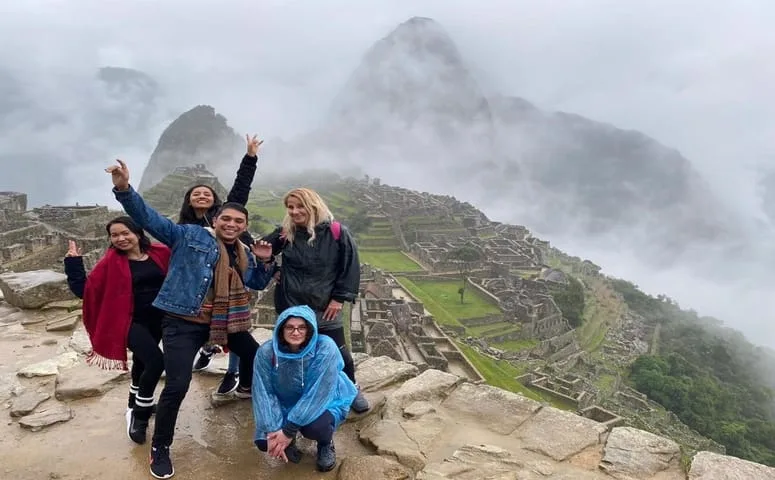
For the driest days, visit from May to September. June to August are the busiest months, especially around Inti Raymi on June 24, so book ahead. April, May, September and October bring fewer visitors than June to August, with mostly fair weather.
Our own favorite month is May. The rains have just ended, the hills are still green and the skies are mostly clear.
November to March brings green hills and fewer crowds, with a daily chance of rain. For timing on the coast, the Amazon and the rest of the country, see our guide to the best time to visit Peru.
Whatever month you travel, stay near the Plaza de Armas if you can. Walking at this altitude takes effort, and staying central keeps restaurants and museums close, including the best restaurants in Cusco.

Plan Your Cusco Days With a Local Team
We are based in Cusco, so we plan every tour around the weather we see each day. In the rainy season, that means early starts, before the afternoon showers roll in. In the dry season, it means warm layers for cold mornings and sun protection for midday.
Our Sacred Valley day tour starts from USD 139 per person and lasts about 12 hours. It runs in small groups of up to 8, with hotel pickup. For higher, colder trips, browse our day trips from Cusco, including Humantay Lake and Rainbow Mountain.
If Machu Picchu is part of your plan, our Machu Picchu tours include a 1-day visit from Cusco and the 4-Day Inca Trail. Send us your dates, and our Cusco team will help you plan your days around the season.
FAQ About Weather in Cusco, Peru
What is the weather like in Cusco, Peru, year-round?
Cusco has mild days and cold nights all year because it sits at about 11,150 feet (3,400 meters). Average highs range from 69°F (20°C) to 72°F (22°C), and average lows from 34°F (1°C) to 46°F (8°C). The dry season runs from May to September and the rainy season from November to March.
What is the rainiest month in Cusco?
January is the rainiest month in Cusco, with about 6.0 inches (153 mm) of rain over 20 rainy days. February follows with about 5.2 inches (132 mm) over 17 rainy days. In our experience, showers are often short, so morning tours usually still work well.
How cold does Cusco get at night?
Cusco is coldest at night in June and July, with average lows of 35°F (2°C) and 34°F (1°C). Station records show lows near 19°F (-7°C) in May and July. Pack a warm jacket, gloves and a beanie for evenings in the dry season.
What is the weather like in Cusco in December?
December in Cusco is wet and mild, with about 4.9 inches (125 mm) of rain over 17 rainy days. Highs average 70°F (21°C) and lows 46°F (8°C). Start sightseeing early and wear waterproof shoes on wet cobblestones.
What is the weather like in Cusco in February?
February in Cusco is in the rainy season, with about 5.2 inches (132 mm) of rain over 17 rainy days. Highs average 69°F (20°C) and lows 46°F (8°C). The hills are very green, but trails can be wet and muddy.
What is the weather like in Cusco in September?
September in Cusco is mostly dry, with about 0.7 inches (18 mm) of rain over 4 rainy days. Highs average 71°F (22°C) and lows 41°F (5°C). It is a good month for day trips, and crowds usually thin out after the June to August peak.
What is the weather like in Cusco in October?
October in Cusco is a shoulder month, with about 2.1 inches (55 mm) of rain over 9 rainy days. Highs average 71°F (22°C) and lows 44°F (7°C). Mornings are often clearer, so plan the main stops early and carry a rain jacket.
Is the rainy season a bad time to visit Cusco?
No, the rainy season from November to March can be a good time to visit Cusco. Rain is frequent, but we find it often comes in short showers, and the landscape is green with fewer crowds. Pack rain gear and plan outdoor time for the morning.
Is the Sacred Valley or Machu Picchu warmer than Cusco?
Yes, both the Sacred Valley and Machu Picchu are lower than Cusco and usually feel warmer. Machu Picchu sits at 7,972 feet (2,430 meters) in tropical mountain forest, so it is also more humid. See our Machu Picchu weather guide for details.
Do I need sunscreen in Cusco even when it feels cool?
Yes, you need sunscreen in Cusco even on cool or cloudy days. UV radiation increases with altitude because thinner air absorbs less of it. Use high-SPF sunscreen, a hat and sunglasses every day.






Jeremiah Jenkins15 December, 2022 at 11:45 am
I have heard about the crazy weather in Cusco! It can very warm and beautiful during the day but as soon as the sun goes down it get’s freezing cold. I really like the quick overview table! Thanks guys
Konsti from Exploor Peru29 December, 2022 at 3:30 am
Hi Jeremiah,
thanks for your message. The weather in the Peruvian Andes is really unpredictable and therefore it’s crucial to pack the right things for your trip.
For more information feel free to contact us via email: [email protected]
Best,
Konstin