

Why Combining Sacred Valley and Machu Picchu is a Must-Do
- 16 October, 2026
- by Oliver Eberlein
Combining the Sacred Valley and Machu Picchu lets you visit major Inca sites, acclimate gradually, and save time on transfers.
Read more

You take a deep breath, the air feels lighter, thinner. Each step requires more effort, but also more attention. Welcome to Cusco, a city nestled high in the Andes, where ancient stone streets and towering mountains invite you to slow down. Here, altitude isn’t just a number, it’s part of the journey.
For many travelers, so-called “soroche”, or altitude sickness, can be the first obstacle. But more than a challenge, it’s an invitation to change pace, to listen to your body, and to adapt. Cusco, and many other Andean cities, are not rushed. They are experienced slowly, step by step, breath by breath.
This adaptation process also offers an unexpected gift: the possibility of experiencing a deeper connection with oneself. In the pause, in the measured breathing, a clearer awareness of one’s body and surroundings emerges.
Cusco, the capital of the ancient Inca Empire, is located more than 3,300 meters (10,827 feet) above sea level. It is not alone: cities like Puno 3,827 meters (12,556 feet), Huaraz 3,052 meters (10,013 feet), and Arequipa 2,335 meters (7,661 feet) are also located at considerable altitudes.
Cusco’s location is no accident. For ancient Andean cultures, elevation was sacred, bringing them closer to the Apus, the powerful mountain spirits, and the heavens above.
Cusco’s architecture reflects this: narrow streets that climb hills, Inca walls that defy earthquakes, colonial temples built on sacred foundations. This blend of styles speaks of resilience, of adaptation, of a history that has never stopped breathing.
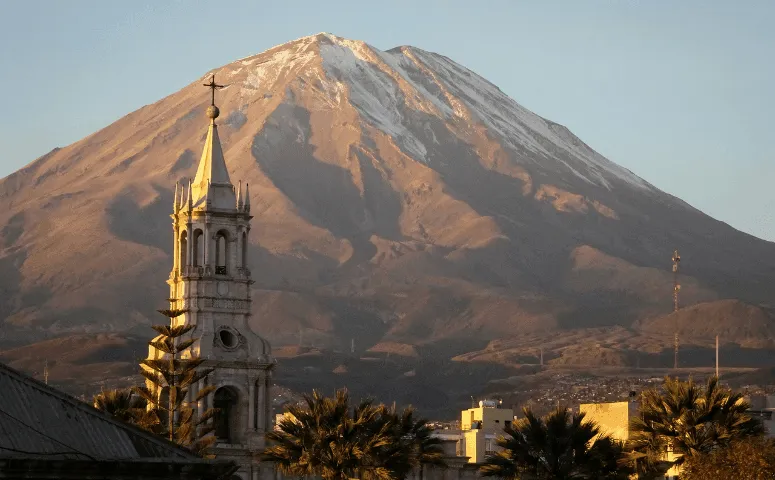
This spiritual connection isn’t just a feeling, it’s woven into the city itself. As you wander Cusco’s steep, cobbled streets, you’ll notice ancient Inca walls fitted so precisely that not even a blade of grass can slip between the stones.
These foundations have withstood centuries of time and tremors. Above them, colonial churches rise. built directly atop sacred Inca temples. It’s a city layered with meaning, where every wall tells a story of survival, adaptation, and a deep-rooted cultural identity that’s still alive today.
Looking to explore this living history with expert guides? Check out our 5-Day Machu Picchu Experience, a perfect way to acclimate and uncover the layers of Incan and colonial heritage.
The human body responds to altitude with a series of adjustments. The lower amount of oxygen in the air forces the body to work harder to deliver oxygen to the organs. This can cause symptoms such as headaches, nausea, fatigue, or insomnia. However, it can also be prevented and managed.
Once you arrive at high altitude, tuning in to both your body and your surroundings is key. Take it slow, stay hydrated, and opt for light meals as your system adjusts. One of the most time-honored remedies? A warm cup of coca or muña tea.
These herbal infusions aren’t just soothing, they’re rooted in centuries of Andean wisdom, offering comfort and connection to the traditions that have supported highland communities for generations.
Nature also changes: colors become more intense, the sky clearer, and clouds closer. Andean plants, such as muña and chachacoma, not only survive here: they flourish, and many are used by communities as natural medicine to reduce the effects of altitude sickness.
Cusco doesn’t stop at altitude. On the contrary, it vibrates with it. Traditional festivals, such as Inti Raymi or Cusco’s Holy Week, are celebrated with vigor, music, and color at over 3,000 meters (9,843 feet) above sea level. The streets fill with dancers, pilgrims, and tourists eager to be part of an authentic experience.
In markets like San Pedro, daily life flows without pause. There, local products, such as quinoa, purple corn, and Andean cheese, are displayed alongside natural remedies for altitude sickness. The pace is different, but it’s full of life.
The way you arrive in Cusco can make a difference. If you arrive by plane, the impact may be more intense. If you choose to travel by land, from Arequipa or the Sacred Valley, your body has more time to adapt.
In either case, the journey offers mountain landscapes that seem like something out of a painting. Villages emerge from the valleys, llamas cross the road, clouds descend to accompany you. It’s not just a physical journey, it’s an emotional transition to another state of consciousness.

Altitude forces you to slow down, but that same pace reveals things you would normally overlook: a sunlit colonial rooftop, a conversation between two artisans, a woman spinning seated next to her market stall. Altitude, well experienced, doesn’t distance you from the experience: it connects you more.
Traveling at this level, one learns to breathe differently, to value each breath, each pause. You shouldn’t fear the heights, but rather learn to embrace them.
This pause imposed by altitude can also become a lesson. It reminds us that travel isn’t a list of destinations, but a way of inhabiting the present. It’s in slowness that the most memorable details are hidden. In the silence of bated breath, in resting under the high Andean sun, in the embrace of a hand-woven blanket.
Learning to walk at the pace of the mountains is also learning to look within. On those slower days, when less demands are placed on the body, space opens up for a more contemplative experience, to rediscover the art of traveling without urgency.
Looking for a more mindful approach to travel in Peru? Learn more about our Customizable Peru Tours that allow you to adjust the pace, focus on wellnes and travel with intention.
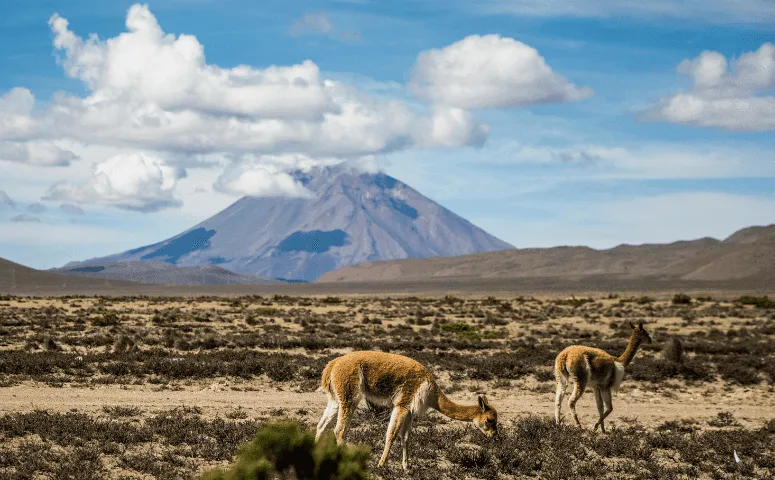
We want you to feel the altitude, yes. But not as a barrier, but as a living part of the journey. Join us to breathe higher, to see the world from a different perspective, and to build memories with your feet firmly on the ground and your heart open to the sky.
Here, we don’t sell destinations: we share experiences that stay with you long after you return. Because for us, every trip is an invitation to look differently, to feel more deeply, and to live with intention.
Contact us and join those who travel with purpose and let us accompany you on an adventure that uplifts the soul as much as the body.
Cusco is more than 3,300 meters (10,827 feet) above sea level. Puno is around 3,827 meters (12,556 feet), Huaraz is about 3,052 meters (10,013 feet), and Arequipa is roughly 2,335 meters (7,661 feet). These elevations shape how travelers should pace their first days.
Common effects include headaches, nausea, fatigue, and trouble sleeping. Take it slow on arrival, drink water often, and choose light meals like soups and fruit. Rest helps, and skipping alcohol early on can reduce strain.
Many travelers drink warm coca or muña tea for comfort when adjusting. These infusions are part of long-standing Andean traditions and are widely offered in highland areas.
Yes. The Sacred Valley sits lower than Cusco, which can make the first days easier. Starting there gives your body more time to adapt before you head higher.
Arriving by plane can feel more intense because the change is sudden. Traveling by land from places like Arequipa or the Sacred Valley provides a gentler transition with more time for your body to adjust.

Liz Radisson1 August, 2025 at 5:33 pm
Thank you so much for these tips! I bough Soroche pills and Altivital, both were excellent…I liked Altivital even better as the guy at the pharmacy said it was all natural.
Oliver from Exploor1 August, 2025 at 5:52 pm
That’s great to hear, Liz! I’m so glad the tips helped and that both Soroche pills and Altivital worked well for you. I’ve heard good things about Altivital too - especially since it’s all natural. Sounds like you were well prepared!😊