Embarking on Circuit 3A means signing up for one of the most thrilling and visually dramatic mountain experiences on the planet. This specific route is custom-built for adventure seekers who want to conquer the iconic peak that frames the backdrop of every famous photo of the citadel.
As you ascend the hand-cut vertical stone staircases built directly into the mountain face by the Incas, you will unravel centuries of architectural genius while suspended high above the Urubamba River canyon. This guide covers the logistical realities, physical challenges, and planning strategies required to safely book and complete this elite trekking circuit.
Key Takeaways: Circuit 3A at a Glance
- The Ultimate Peak Climb: Circuit 3A grants you access to the legendary and steep ascent up Huayna Picchu mountain, rewarding hikers with towering aerial views over the entire stone sanctuary.
- The mountain permit is far more restricted than the citadel itself. While overall Circuit 3 access follows the sanctuary’s daily caps, the Huayna Picchu climb specifically is rationed to roughly 200 to 400 permits per day, split across four staggered morning entry groups. This is the single tightest ticket at the site, and it sells out first every season.
- Minimum age is 12. Children under 12 aren’t permitted on the Huayna Picchu trail, even accompanied by an adult, due to the exposed cabling and narrow stairways.
- Official Ticket Pricing: Standard government-issued entry passes cost S/ 200 (approximately $53 USD) for international adults and S/ 118 (approximately $31 USD) for children and students aged 3 to 17.
- Demanding Physical Commitment: The vertical climb requires roughly 2.5 to 3 hours of strenuous round-trip hiking. Proper high-altitude acclimatization, a well-timed morning start, and rugged weather-ready gear are mandatory.
- No Upper Overlook Access: This specialized adventure track stays on the lower tiers of the citadel. It does not include entry to the upper agricultural terraces, meaning you will miss the standard postcard photo angle from this ticket alone.
Why Choose Circuit 3A?
Selecting Circuit 3A (widely known as the Huayna Picchu Mountain Route) transforms your visit to Machu Picchu into an adrenaline-fueled historical quest. This premium ticket is explicitly designed for travelers who crave an immersive, heart-pumping challenge that goes far beyond standard sightseeing loops.

By securing this specific pass, you earn the right to tackle the hike to Huayna Picchu, the iconic, towering green peak that stands directly behind the ancient citadel in every world-famous photograph.
Key highlights of the Huayna Picchu experience
- Unparalleled bird’s-eye perspectives. Once you conquer the vertical granite stairs, the summit rewards you with a breathtaking, 360-degree aerial panorama. You’ll look straight down at the entire layout of the stone city, framed by the deep green canyons of the Urubamba River.
- The thrill of the Inca staircases. This route tests your stamina on original, hand-carved stone steps built directly into near-vertical cliff faces. Navigating these narrow pathways brings you face-to-face with the audacity of ancient Inca masonry and engineering.
- Deep architectural immersion. Alongside the mountain climb, Circuit 3A guides you through the sacred lower tier of the citadel, also known as the Royalty Route. This lets you inspect high-status Inca sectors up close, including the Temple of the Sun, the House of the Inca, and the Sacred Rock.
For active travelers, fitness enthusiasts, and photography purists seeking a deeper, more physically rewarding connection to the ancient world, Circuit 3A delivers the most demanding version of the Machu Picchu experience.
Physical and Logistical Considerations for Circuit 3A
Conquering Circuit 3A requires a rigorous physical mindset and meticulous planning, primarily due to the demands of the famous climb up Huayna Picchu. The trail is highly challenging and recommended for travelers in good physical condition who have steady balance and comfort with heights. Because the paths are narrow, steep, and can become slick under shifting mountain conditions, knowing what to expect physically and logistically is key to a safe and rewarding journey.

The realities of the climb and altitude acclimatization
The physical challenge of Huayna Picchu comes less from the raw altitude and more from the sheer steepness of the terrain. While the citadel itself sits at 2,430 m (7,972 ft), the mountain trail climbs an additional roughly 290 m (950 ft) over a tight, switchback path to a summit around 2,720 m (8,923 ft).
- Vertical stone staircases. You’ll navigate hundreds of narrow, hand-carved Inca steps built into near-vertical granite cliffs. In the most exposed sections, some travelers describe these as the “Stairs of Death,” and you’ll need to use your hands and grip installed safety cables to maintain your footing.
- Strenuous descent. The descent requires just as much focus and knee stability as the climb, since the steep steps force you to carefully control your balance with every downward step.
- Preventing altitude fatigue. Even though the summit sits lower than Cusco, the continuous vertical exertion will test your lung capacity. Spending at least 48 hours resting and adapting in Cusco or the lower Sacred Valley beforehand is worth doing to reduce the symptoms of altitude sickness.
Age and physical restrictions
Access to the Huayna Picchu trail is limited to travelers age 12 and older, and this is enforced at the checkpoint regardless of whether a child is accompanied by an adult. If you’re traveling with younger children, plan on one adult in your party skipping the mountain climb, or choose a different circuit for the family day and add Huayna Picchu on a separate visit.
Logistical deadlines and microclimates
Securing entry for Circuit 3A is one of the toughest logistical tasks in planning an Andean trip, due to its popularity and the genuinely tight mountain-specific permit cap described below.
Permit deadlines: Huayna Picchu tickets are heavily rationed and sell out faster than any other ticket at the site. Booking your permits 4 to 6 months in advance is close to a necessity, especially during the peak dry season.
The subtropical mountain weather can also pivot from intense, clear sunshine to a thick, damp mist within minutes. Broken-in hiking shoes with deep rubber traction are vital to prevent slipping on the damp stone masonry. For a detailed seasonal guide on rainfall and temperature cycles, check out our report on Machu Picchu weather.
Strategic entry and circuit boundaries
To experience the lower citadel and the mountain trail before the intense midday heat and heavy day-tripper crowds arrive, aim to secure an early morning entry slot.
Keep in mind that Circuit 3A is restricted to the lower tier of the complex. You won’t be allowed to ascend to the upper agricultural terraces or stand by the Guardhouse for the traditional panoramic snapshot. If your goal is to also reach the higher vantage points of the sanctuary, explore our complete breakdown of the Machu Picchu circuits to balance adventure with your photography goals.
Permits, Capacity Caps, and Ticket Pricing for Circuit 3A
To preserve the structural integrity of the ancient stone masonry and maintain trail safety along the steep mountain ridges, Peru’s Ministry of Culture enforces layered capacity limits: one for the sanctuary generally, one for Circuit 3 as a route, and a separate, far tighter one for the Huayna Picchu climb itself.

Two different caps, easy to confuse
The sanctuary’s overall daily visitor cap moves seasonally, up to 5,600 during high season (June 1 to October 15, and December 30 to 31) and 4,500 the rest of the year, and Circuit 3 as a whole shares in that broader allocation. But the Huayna Picchu mountain climb specifically is rationed far more tightly, at roughly 200 to 400 permits per day depending on the season and source, split into four staggered morning entry groups timed roughly an hour apart. That mountain-specific cap, not the sanctuary’s overall number, is what actually determines whether you get a Huayna Picchu slot on your date.
Because of that separate, narrow allocation, Huayna Picchu tickets are consistently the first to sell out at the site each season, often months ahead of the standard circuit tickets.
Official ticket price breakdown
Standard government-issued entrance fees are uniform across all booking systems. These prices cover citadel sector and mountain path entry only:
| Ticket Category | Price in Peruvian Soles (S/) | Approximate Cost (USD) |
| International Adult | S/ 200 | ~$53 USD |
| Child / Student (Ages 3-17) | S/ 118 | ~$31 USD |
Prices for Machu Picchu tickets have shifted more than once in recent years as new conservation surcharges have been introduced, so treat these as a strong estimate and confirm the current rate when you book.
Advance booking deadlines and transit logistics
To secure your preferred morning climbing block up Huayna Picchu, finalize your reservations at least 4 to 6 months ahead, particularly if your trip falls during the peak dry season.
When you coordinate your Machu Picchu tour through our team, you skip the logistical headache entirely. Our itineraries bundle your entry permits, a private guide, lunch, and all necessary transit vouchers into one package.
We also recommend researching the different trains to Machu Picchu. Deciding whether to ride in the panoramic-window cars of the PeruRail Vistadome or the Belmond Hiram Bingham adds an extra layer of comfort to your day.
Gear and Apparel Requirements for Circuit 3A
Tackling Circuit 3A and the vertical cliffs of Huayna Picchu requires a lean, strategic daypack. Because you’ll be actively climbing steep, exposed stairs and using safety cables, keeping your hands free and your footing secure is non-negotiable.
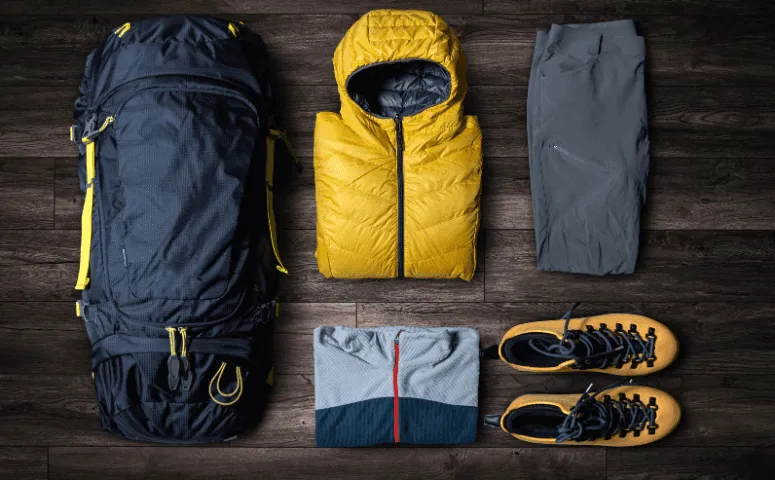
To stay safe and comfortable during this demanding trek, pack:
- Original physical passport (mandatory). You can’t pass the main turnstiles without it. Park rangers check it against your Huayna Picchu permit.
- High-traction hiking shoes. Broken-in trail runners or hiking boots with deep rubber lugs grip the narrow, hand-carved Inca steps, which can turn slick with morning cloud forest humidity.
- Breathable, lightweight clothing. The ascent is a real cardiovascular workout. Dress in moisture-wicking layers you can strip off as your body temperature rises.
- A packable rain jacket or poncho. Sudden tropical showers or mountain mist can sweep through the canyon with little warning.
- Sun protection. A wide-brimmed hat, polarized UV sunglasses, and high-SPF sunscreen for the exceptionally strong high-altitude sun.
- Insect repellent. The lower tier of the citadel and the base of the mountain are prime territory for biting midges. Apply before you start the hike.
- A refillable water bottle. Single-use plastic bottles are banned inside the sanctuary. Bring a durable reusable bottle or hydration bladder for the 2.5 to 3 hour round trip.
- Energy snacks: nuts, trail mix, or energy bars to maintain stamina on the steep stretches.
- Any altitude or basic pain medication you use, agreed with your doctor beforehand.
Bag size reminder: Park regulations limit daypacks to a maximum of 40 x 35 x 20 cm. Larger backpacks must be left at the storage lockers just outside the main gate for a small fee.
For an item-by-item breakdown of restricted gear, dress codes, and luggage size guidelines, read our master Machu Picchu packing list before you pack.
Elevate Your Adventure with the Huayna Picchu Route

Choosing Machu Picchu Circuit 3A delivers a combination of archaeological exploration and a genuine physical milestone. Climbing the steep, vertical pathways of Huayna Picchu means you don’t just look at history, you climb into it.
Because the mountain permit is the single tightest ticket at the site, spontaneous bookings essentially don’t exist. Securing your permit months ahead is the most critical step in protecting your travel dates.
Ready to test your limits on the Inca stairs, or have questions about the entry groups and timing? Reach out to our travel team. We handle the permits, private guiding, and logistics so you can focus on the climb.
Frequently Asked Questions About Machu Picchu Circuit 3A and Huayna Picchu
What is Huayna Picchu?
Huayna Picchu is the steep, cone-shaped mountain that rises directly behind Machu Picchu in nearly every classic photograph of the citadel, reaching a summit around 2,720 m (8,923 ft). The Incas built a trail and small ceremonial structures at the top, and today it’s accessible only with a Circuit 3A ticket, separate from standard Machu Picchu admission.
How many permits are available for Huayna Picchu per day?
The Huayna Picchu climb is capped at roughly 200 to 400 permits per day depending on the season and source, split across four staggered morning entry groups, which is considerably tighter than the sanctuary’s overall daily visitor cap. This narrow, separate allocation is why Huayna Picchu tickets sell out before almost any other ticket at the site.
How long does the Huayna Picchu route take?
Plan for approximately 2.5 to 3 hours to complete Circuit 3A, including the full round-trip climb and descent of Huayna Picchu mountain. Because the trail features near-vertical staircases that can turn slick with morning mist, pace yourself and build buffer time into your day.
Is Huayna Picchu dangerous?
Huayna Picchu is not considered dangerous for travelers in good physical condition who are comfortable with heights and exposed stairways, and installed safety cables help on the steepest sections. It is genuinely more demanding than the standard circuits, with narrow, uneven steps and real drop-offs, so it isn’t the right choice for anyone with significant balance issues, a fear of heights, or mobility limitations.
Is Huayna Picchu worth it?
For travelers who want an active, physically engaging visit and don’t mind paying extra and booking months ahead, most find the summit views over the citadel and the Urubamba valley worth the climb. If you mainly want the classic postcard photograph or a gentler visit, a standard circuit like 1B or 2A is a better and considerably cheaper fit.
What will I see on Circuit 3A with Huayna Picchu?
Beyond the mountain summit, Circuit 3A guides you through the lower tier of the citadel, historically known as the Royalty Route, with close access to the Temple of the Sun, the Sacred Rock, the lower agricultural terraces, and the ancient urban drainage systems.
Do I need a guide for the Huayna Picchu route?
A guide isn’t legally mandatory to pass the trail checkpoints, but exploring these structures without one means missing most of the cultural, astronomical, and architectural context of the site. A fully coordinated guided tour also bundles your permits, train vouchers, guide, and lunch into one package.
Is there a minimum age to climb Huayna Picchu?
Yes, travelers must be at least 12 years old to access the Huayna Picchu trail, and this is enforced at the checkpoint regardless of adult supervision. Families with younger children typically split the day, with one adult climbing while the other stays with the kids on a standard circuit, or add the climb on a separate visit.
When is the best time to do Huayna Picchu?
The Andean dry season, roughly April to October, delivers the most dependable weather and best trail conditions, but it’s also when permits disappear fastest. Book months beforehand regardless of season, and earlier still if your trip falls in the June 1 to October 15 high-season window.
Can I get the classic Machu Picchu photo on Circuit 3A?
No. Circuit 3A stays on the lower portions of the site and doesn’t reach the upper terraces or the Guardhouse, where the traditional postcard view is taken. You’ll get spectacular aerial views from the Huayna Picchu summit instead, but for the classic angle you’ll need a Circuit 1 or Circuit 2 ticket.






Piotr Zielinski7 December, 2024 at 9:23 am
We did this circuit last week with your team and guide Peter! What an ADVENTURE! Thanks for creating this blog post as otherwise we would have made the wrong decision..
Konsti from Exploor Peru8 December, 2024 at 12:43 am
Hello Piotr,
this is a fantastic circuit and I am glad to hear that our blog post was helpful for you.
We can’t wait to see your pictures on social media!
Best,
Konsti