background

15 Incredible Amazon Rainforest Animals to Spot in Peru

15 Incredible Amazon Rainforest Animals to Spot in Peru

Key Takeaways

  • The Peruvian Amazon is one of the most biodiverse regions on Earth, home to thousands of animal species, including many that are rare or endemic.
  • Visitors can commonly spot wildlife such as monkeys, macaws, caimans, capybaras, river dolphins, and a wide range of insects and frogs when staying at lodges or joining guided tours.
  • The best time for wildlife viewing in the Peruvian Amazon is typically the dry season (roughly May to October), when lower water levels concentrate animals along riverbanks and trails.
  • Guided tours with local naturalist guides greatly increase your chances of seeing wildlife and help you spot animals that are well camouflaged or active only at certain times of day.
  • Many Amazon animals in Peru are sensitive to human impact, so visitors should follow responsible tourism practices, such as keeping a safe distance, avoiding loud noise, and never feeding wildlife.


The Amazon Rainforest in Peru is a top destination – and the trip of a lifetime – for any nature lover.  Accounting for more than half of the world’s rainforests, there is a lot to explore in the Amazon jungle. Let’s take a look at some of the most fascinating mammals, birds, and reptiles that you can spot in the Peruvian Amazon.


Amazon Rainforest Mammals

Along with stunning nature, the Amazon Rainforest in Peru is teeming with wildlife.

Depending on the season and weather in Iquitos, you might spot certain species more easily. Regardless of when you visit, however, you are bound to have an unforgettable wildlife experience.


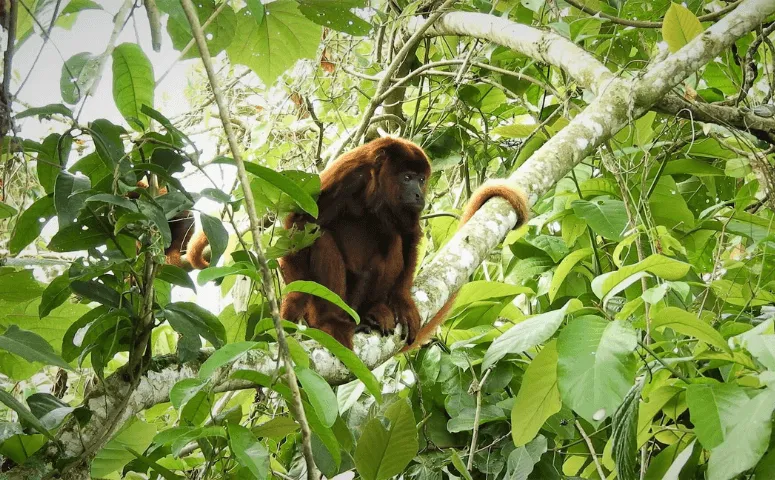
Red Howler Monkey

Monkey sitting on a branch in a tree Amazon Peru with Exploor Peru

Named after their distinctive howl-like sounds, howler monkeys are one of the largest species in the New World monkeys family. Their diet is primarily made up of leaves, but they will regularly eat other plant items such as fruits, seeds, and flowers.

The red howler monkeys have beards and long, thick red hair, and are the most common howler species.

With an abundance of leaves and plants in the Peruvian Amazon, these monkeys can spend up to 70% of their day resting in the trees as they don’t have to spend much time foraging.

Fun fact: When a troop of howler monkeys occupies a territory, the males use their voices to send a message to other monkeys, usually at dawn time. Their loud calls can be heard up to three miles away.


Pink River Dolphin

Pink dolphin in the water Amazon Peru with Exploor Peru

The pink river dolphin is a unique freshwater dolphin that swims through the currents of the Amazon river. Unlike their marine fellows, pink river dolphins (also called Amazon river dolphins) have rounded foreheads and long, skinny beaks.

These friendly species are considered mythical creatures in many South American folklore and are most recognizable by their unique pink hue.

Fun fact: The brighter the pink color, the more attractive the males are to females during mating season.


Amazonian Tapir

Tapir in the wilderness Amazon Peru with Exploor Peru

Amazonian tapirs are one of the largest mammals in South America.

Tapirs have a charming, yet unusual appearance – thick necks and short trunks used for grasping objects and lifting food into their mouths. While they may seem sedentary, tapirs can actually cover great distances in the forest.

The tapir prefers moist, humid areas, so they can often be found near waterways where they can bathe, rest, and eat.

Fun fact: The Amazonian tapir is an excellent swimmer that uses its trunk as a snorkel. These fascinating mammals often submerge in the water to cool off or feed on aquatic plants.


Sloth

Sloth hanging on a branch Amazon Peru with Exploor Peru

The sloth is one of the most distinct mammals in the Amazon rainforest. Sloths have an exceptionally low metabolic rate, which means that they spend the majority of the day sleeping.

Known for their leisurely pace of life, these slow-moving tree-dwellers can sleep up to 18 hours a day. Although they resemble monkeys, sloths are actually part of the armadillos and anteaters’ family.

In the Amazon, you can find two types of sloths – two-toed (omnivores) and three-toed sloths (herbivores).

Fun fact: While they do enjoy napping, sloths feel right at home in the water. Occasionally, they drop from their treetop perches into the water for a swim. They use their arms to paddle and can even cross rivers.


Capybara

Capybara in the wilderness Amazon Peru with Exploor Peru

The capybara, a crowd favorite, is the largest rodent on earth, weighing about 100 lb (45 kg). Unlike their guinea pig cousins, capybaras have a heavy, barrel-shaped body with legs that are shorter in the front.

These herbivores are semi-aquatic and spend most of their time in dense vegetation around lakes, rivers, and ponds.

Because they enjoy more humid habitats, capybaras have evolved to have partially webbed feet that help them propel through water and swampy areas.

Fun fact: Capybaras eat their own feces in the morning. The meal is very rich in protein and contains healthy bacteria that help their stomach digest the fiber from grass.

To see any of these animals in the Peruvian Amazon, knowledgeable guides are a must. A great way to enjoy the magic of the rainforest and witness its rich wildlife is by joining our 4-day Iquitos tour.

Short on time? Check out the 3-day tour in Iquitos.


Amazon Rainforest Birds

The Amazon Jungle is a dream come true for birdwatchers and nature lovers alike. Here are five species you need to know about.


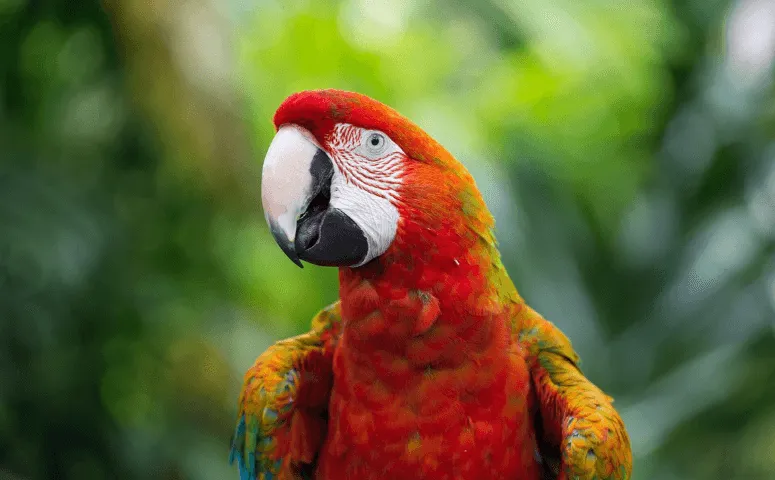
Macaw

Macaw with red and orange feathers Amazon Peru with Exploor Peru

Macaws are long-tailed, colorful members of the parrot family. They have strong beaks that allow them to easily crack nuts and seeds. More surprisingly, their tongs have a bone inside them, making them incredibly useful for tapping into fruits.

Macaws are very social and intelligent birds. They gather in flocks of up to 30 birds and their distinctive calls and screams echo through the Amazonian rainforest.

Fun fact: Once they pick a partner, macaws typically stay together for life. Even more, pairs spend a great deal of their time together – caring for their young, sharing food, and grooming. They can also be seen flying close to each other throughout the rainforest canopy.


Spangled Cotinga

Bird with blue feathers sitting on top of a tree Amazon Peru with Exploor Peru

Spangled cotingas are tropical birds that can be seen across the Amazon river basin. Their diet consists primarily of fruits and they inhabit places filled with moist lowland forests.

Fun fact: The extraordinary blue-turquoise color of the spangled cotinga is only seen in male species. The females are more discreet and have a brownish hue.


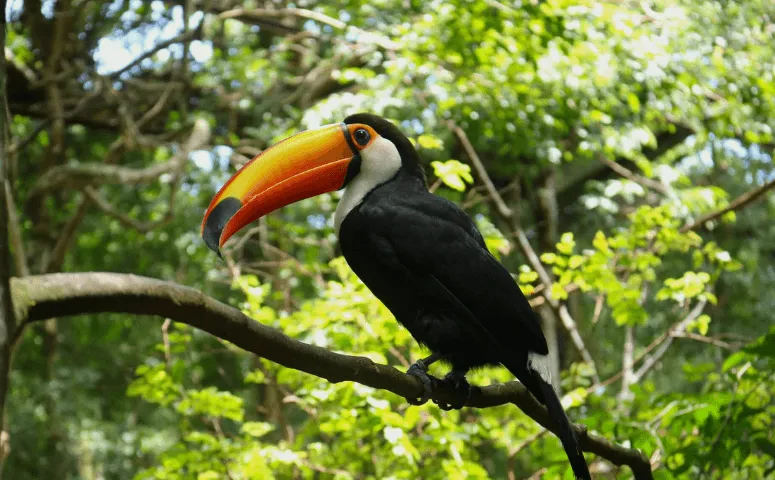
Toucan

Toucan sitting on a branch of a tree Amazon Peru with Exploor Peru

The toucan is one of the most fascinating animals that call the Amazon home. Its oversized, colorful beak has made it one of the most well-recognized birds on Earth.

The toucan’s beak accounts for nearly half of its length and is a useful tool for plucking and peeling fruits such as guavas, figs, and oranges. Toucans are omnivorous and eat a variety of foods, including insects, rodents, and even small birds.

Fun fact: Although toucans spend a lot of their time in trees, they are not the best fliers around. They’re typically seen hopping among trees or flapping their wings vigorously to travel short distances.


Royal Flycatcher

Birth with orange feathers on his head and dark points Amazon Peru with Exploor Peru

The royal flycatcher can be found in the Amazonian forest understory, commonly near streams. There, it forages for grasshoppers, ticks, butterflies, and dragonflies.

Royal flycatchers are best known for their spectacular crest. Though they display it rarely, when perched upright, the crest reveals stunning red and blue colors.

Fun fact: The Amazonian royal flycatcher is relatively quiet but occasionally it would give a series of high, sharped calls, typically followed by a series of descending whistles.


Paradise Tanager

Bird with blue feathers and yellow head on a branch Amazon Peru with Exploor Peru

The paradise tanager is a beautiful, multicolored songbird. These birds are omnivorous and eat a variety of fruits and insects.

They move around in small flocks and can be found in multiple places around the rainforest, including the Pacaya Samiria national park, which is also one of the top 10 things to do in Iquitos.

Fun fact: While their bright colors may appear rather bold, they actually act as a great camouflage in the Amazonian forest.


Amazon Rainforest Reptiles

Nestled deep into the exotic Peruvian Amazon are some of the world’s most fascinating reptile species. Let’s take a look.

Side-Neck Turtle

One turtle sitting on the stone while the other one is swimming in the water Amazon Peru with Exploor Peru

The yellow-spotted side-neck turtle is one of the largest South American river turtles, growing up to 17in (45cm) long and weighing up to 17lb (8kg).

The Amazon side neck turtle is a freshwater, semi-aquatic species that is best recognized by its yellow markings on the head. As the name suggests, they retract their head by bending their neck to one side and tucking it under the rim of the shell for protection.

Fun fact: The best way to spot a group of side-necked turtles is to look out for clouds of butterflies. Butterflies are likely attracted to these species due to the sodium present in the reptiles’ tear ducts.


Black Caiman

Black caiman at the beach Amazon Peru with Exploor Peru

Black caimans are the largest predators in the Peruvian Amazon basin. Adult species can reach up to 16 feet (5m) long and weigh about 800 lb.

Black caimans love to keep warm and can often be seen sunbathing nearby swamps and lakes. They tend to hunt at night and their prey includes monkeys, armadillos, turtles, and capybaras.

Fun fact: In the wild, a black caiman lives an average of 80 years. In well-preserved environments, it can reach up to 100 years.


Bicolor Tree Frog

Green frog sitting on a branch Amazon Peru with Exploor Peru

The bicolor tree frog is a green tree frog that is known under several different names, including waxy tree frog and giant monkey frog.

Tree frogs thrive in humid, wet environments, which means that they’re almost exclusively found in rainforests. These amphibians spend most of their time in the treetops and secrete a waxy coating to protect their skin from drying out.

Fun fact: For the bigger part of the daylight period, the tree frog sits still on a branch and uses its bright green color to camouflage itself as a leaf.


Green Anaconda

Anaconda in the water Amazon Peru with Exploor Peru

The green anaconda is a member of the boa family and one of the largest snakes in the world. They can grow to more than 29ft (8m) and weigh more than 550lb (250kg).

In the Amazon rainforest, green anacondas live in slow-moving streams and swamps and prey on turtles, birds, capybaras, and even caimans and jaguars.

Fun fact: Underwater, the green anaconda can reach an impressive speed of 6 meters per second.


Poison Dart Frog

Yellow frog sitting on a stone Amazon Peru with Exploor Peru

Poison dart frogs are some of the most colorful species in the reptile and amphibian world. Even more, unlike most amphibians, the poison dart frog is active during the day.

Despite its name, the frog doesn’t use its poison to hunt. Rather, it uses it to ward off predators.

Fun fact: There are over 175 different species of poison dart frog, with the golden poison frog being one of the most poisonous animals in the world. Despite its small size (2 in/5 cm long), the golden poison dart frog has enough poison to kill about 10-20 jaguars.


Learn More About the Animals of Peru’s Jungle

Ready for an unforgettable jungle adventure? Check out our complete Peruvian Amazon travel guide and find out everything you need to know.


Frequently Asked Questions About Amazon Rainforest Animals in Peru

What are the most common animals tourists see in the Peruvian Amazon?

Most visitors to the Peruvian Amazon see a mix of mammals, birds, reptiles, and insects. Common sightings include monkeys (such as howler, capuchin, and squirrel monkeys), colorful macaws and parrots, capybaras along riverbanks, caimans at night, and many frogs and butterflies. With some luck and a good guide, travelers may also see pink river dolphins, sloths, and toucans. The exact animals you see depend on the region, season, and length of your stay.


When is the best time of year to see wildlife in the Peruvian Amazon?

The dry season, roughly from May to October, is often the best time for wildlife viewing in the Peruvian Amazon. River levels are lower, which creates more exposed riverbanks and makes animals easier to spot. Trails are usually less flooded, so guided walks are more comfortable and allow better access to wildlife-rich areas. You can see animals year-round, but the dry season tends to offer more consistent sightings and clearer conditions.


Where in Peru is the best place to see Amazon rainforest animals?

Some of the best areas in Peru to see Amazon rainforest animals are around Puerto Maldonado (Tambopata and Madre de Dios), Iquitos (Pacaya Samiria and nearby reserves), and Manu National Park. These regions have protected areas, established lodges, and trained guides who know where to find wildlife. Tambopata and Manu are known for high biodiversity and good chances to see macaw clay licks, monkeys, caimans, and many bird species. Iquitos is a strong base for river cruises and community-led tours focused on wildlife and river life.


Do I need a guide to see animals in the Peruvian Amazon?

Travelers strongly benefit from having a local guide when looking for wildlife in the Peruvian Amazon. Many animals are shy, active at dawn or dusk, or very well camouflaged. Trained guides know animal behavior, calls, and favorite habitats, which greatly increases your chances of sightings. They also help you stay safe, follow park rules, and understand what you are seeing, from jaguar tracks on the trail to birds high in the canopy. Self-guided wildlife viewing is difficult and far less productive in dense rainforest.


How can I observe Amazon animals in Peru responsibly?

Responsible wildlife viewing in the Peruvian Amazon means keeping a respectful distance, staying quiet, and never feeding or touching animals. Follow your guide’s instructions, stay on marked trails, and avoid using bright flashes for photos, especially at night. Choose lodges and tour operators that support conservation and local communities. These habits reduce stress on wildlife, protect fragile habitats, and help keep the Amazon a healthy place for both animals and people.


4 Comments
  • 6 July, 2023 at 6:55 am

    sehr hifreich und schöne Fotos,die infos hsben sehr weiter geholfen

    • 10 July, 2023 at 10:01 am

      Hallo Famke, lieben Dank für deinen netten Kommentar.

      Alles gute und viele Grüße,
      Oliver von Exploor Peru

  • 17 April, 2022 at 12:27 pm

    Wow how interesting! I didn’t knew that the Peruvian Jungle has so many incredible animals. We can’t wait to come to Peru at the end of July.

    • 19 April, 2022 at 10:20 am

      Hey Diana! Absolutely, the Peruvian jungle is incredible and I’m sure you’ll love it. If you need anything just let us know 🙂 Saludos, Oliver

Leave a comment

Loading
>