

Luxury Peru Travel for USA Couples: The Ultimate Romantic Getaway
- 7 April, 2026
- by Erik Krause
Experience the perfect romantic getaway in Peru with private tours, luxury accommodations, and gourmet dining tailored for couples.
Read more

If you have researched Cusco altitude even briefly, you have come across the phrase “oxygenated room”. It shows up in hotel listings, TripAdvisor threads going back nearly two decades, and family group chats before every trip.
What is less clear from most of that content is what the room actually does, which hotels genuinely offer it versus just an oxygen tank at the front desk, what it costs today, and whether it is worth choosing a hotel for.
This guide covers all four, with named properties and current listings rather than the vague “some hotels offer this” that most articles settle for.
Cusco sits at 11,152 ft (3,400 m), where the air holds roughly 35% less available oxygen than at sea level. An oxygenated room addresses this directly: a system pumps supplemental oxygen into the room’s ventilation, raising the oxygen concentration of the air you are breathing while you sleep, above what the open air in the rest of the hotel or the city provides.
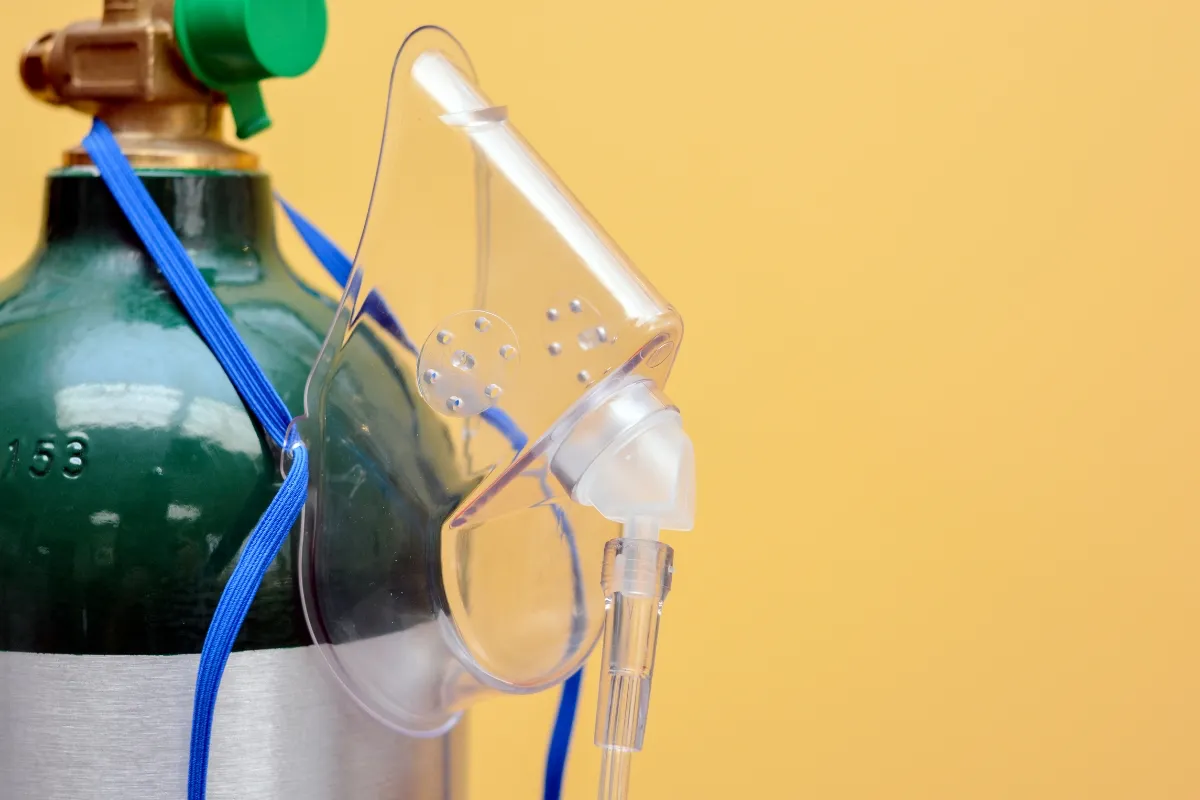
That is a different thing from what almost every hotel in Cusco has regardless of room category: a portable oxygen tank and mask, kept at the front desk or with housekeeping, brought to any room if a guest develops symptoms.
Both are useful, but only one changes the air in the room around the clock. If a listing says “oxygen available on request” without describing an in-room system, that is usually the tank rather than a piped supply, and it is worth asking the hotel directly which one they mean before you book based on the amenity.
This is genuinely debated, and the honest answer sits between the two extremes you will find in travel forums: “it is essential” and “it is a scam that delays acclimatization”.
A study of overnight supplemental oxygen at 12,500 ft found that it reduced daytime fatigue and confusion and improved sleep quality compared to no treatment, without requiring the more elaborate ventilation-support equipment used in the same research. That is a real, measured benefit, and it matches what plenty of travelers report: a better first night’s sleep and less of the grogginess that makes day one in Cusco unpleasant.
What it does not do is substitute for acclimatization. The body’s actual adaptation to altitude, increased breathing rate, changes in blood chemistry, more red blood cells over days, happens on its own physiological timeline regardless of how well you slept the night before.
Supplemental oxygen is symptomatic relief while you are using it. As one altitude medicine specialist put it about portable oxygen in general, it disappears the moment you remove it. Some specialists caution that leaning on it too heavily, night after night, can blunt the ventilatory adaptations your body would otherwise be building.
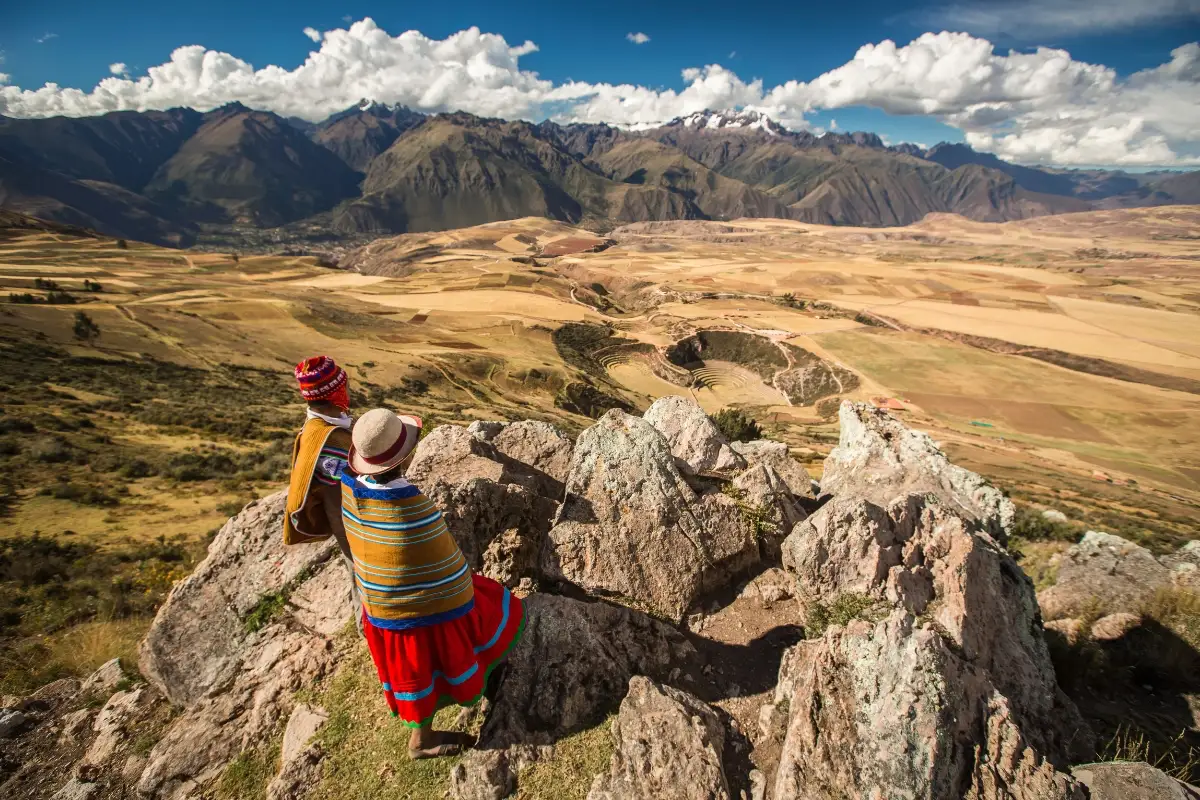
The practical read: an oxygenated room for your first night or two in Cusco is a reasonable comfort measure with some real evidence behind it, particularly for sleep quality. It is not a substitute for the sequence that actually prevents altitude sickness, which is spending time at a lower elevation, ideally the Sacred Valley at around 9,200 ft (2,800 m), before you sleep at Cusco’s full altitude.
Our guide to preventing altitude sickness in Peru covers that sequence in full.
These five currently and verifiably offer oxygen-enriched rooms, not just an emergency tank at the desk.
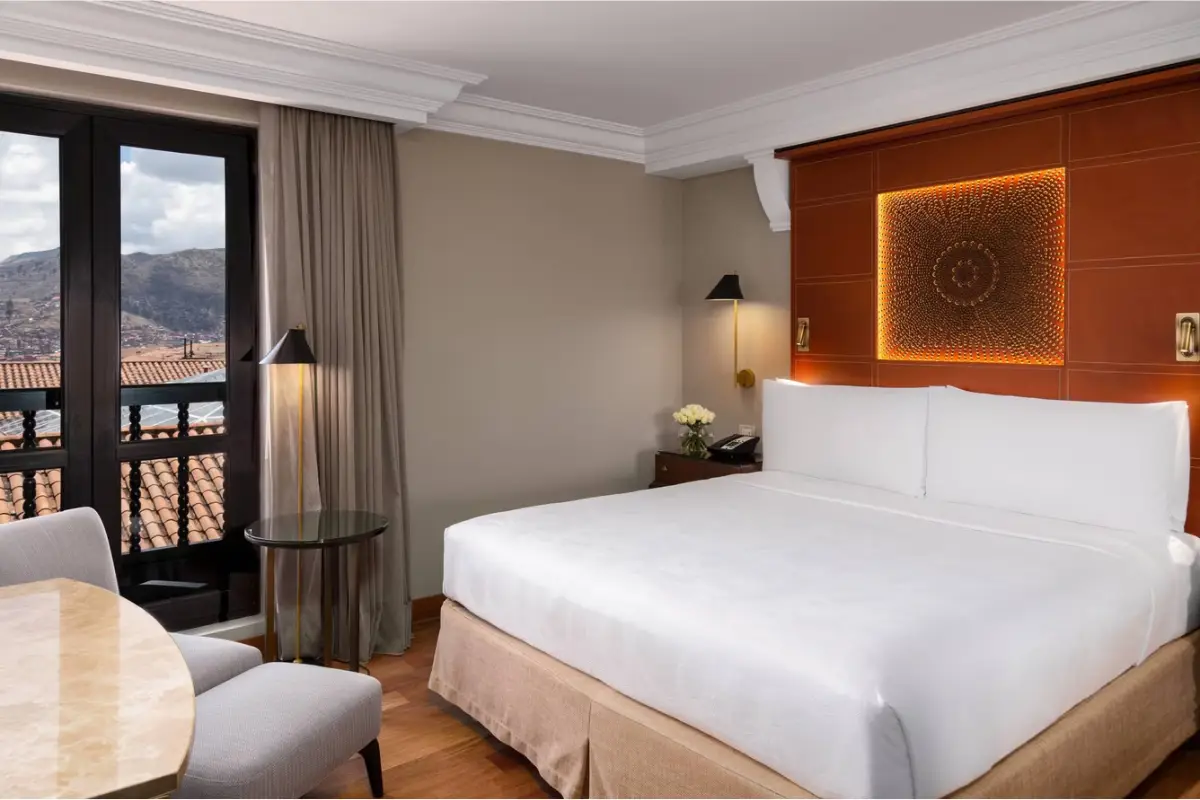
JW Marriott El Convento Cusco. All 153 rooms in this restored 16th-century convent, three blocks from the Plaza de Armas, are fitted with a supplementary oxygen-enrichment system as standard. Several current rate packages list daily in-room oxygen as an included amenity alongside breakfast and coca tea, rather than a paid add-on, which marks a real change from how this hotel used to price it.
Belmond Hotel Monasterio. Also housed in a former monastery near the Plaza de Armas, the Monasterio offers oxygen-enriched rooms and suites as a specific room category. Request it explicitly when booking rather than assuming it is automatic across every room type here.
Palacio Nazarenas, a Belmond Hotel. Built on the site of a former Inca palace and a 16th-century convent, Palacio Nazarenas is Belmond’s other Cusco property and also lists oxygen-enriched rooms among its amenities.
Aranwa Cusco Boutique Hotel. A historic Cusco mansion with a smaller footprint than the properties above. Oxygen rooms here are a distinct, separately bookable category, listed on major booking platforms as “Superior Double Room (Oxygen)” and “Deluxe Twin Room (Oxygen)”, so you select it directly rather than requesting it after booking.
Casa Andina Premium Cusco. An 18th-century manor house a few blocks from the Plaza de Armas, with oxygen available in all rooms and suites on request. This is one of the more accessibly priced properties on this list next to the Belmond and Marriott names, and guest reviews describe staff bringing oxygen to the room and arranging medical support when needed, which is the kind of operational detail that suggests this is not just a listing checkbox.
| Hotel | Oxygen setup | How to get it | Price tier |
| JW Marriott El Convento Cusco | Piped into all 153 rooms as standard | Included, no request needed | Upper-luxury |
| Belmond Hotel Monasterio | Specific oxygen-enriched room and suite category | Request at booking | Upper-luxury |
| Palacio Nazarenas, a Belmond Hotel | Oxygen-enriched rooms | Request at booking | Upper-luxury |
| Aranwa Cusco Boutique Hotel | Named room category, “Oxygen” | Select at booking | Mid-to-upper luxury |
| Casa Andina Premium Cusco | Available in all rooms | On request | Mid-range luxury |
Booking directly through the hotel or a specialist Peru operator, rather than a generic OTA listing, makes it easier to actually confirm the oxygen category by name before you pay, since not every third-party site lists it as a filterable amenity.
The picture is less standardized here, and it is worth knowing that before you assume a five-star Sacred Valley property automatically has what a five-star Cusco hotel has.
At elevations around 9,200 ft (2,800 m), the Sacred Valley is meaningfully lower than Cusco to begin with, which is exactly why it is the recommended first stop for acclimatization. That lower baseline altitude is likely part of why in-room oxygen systems are less commonly advertised here than in Cusco: the need is simply less acute.
What is close to universal at upscale Sacred Valley properties, Tambo del Inka, Sol y Luna, Aranwa Sacred Valley and Inkaterra Hacienda Urubamba among them, is oxygen available at the front desk or on request for any guest who needs it.
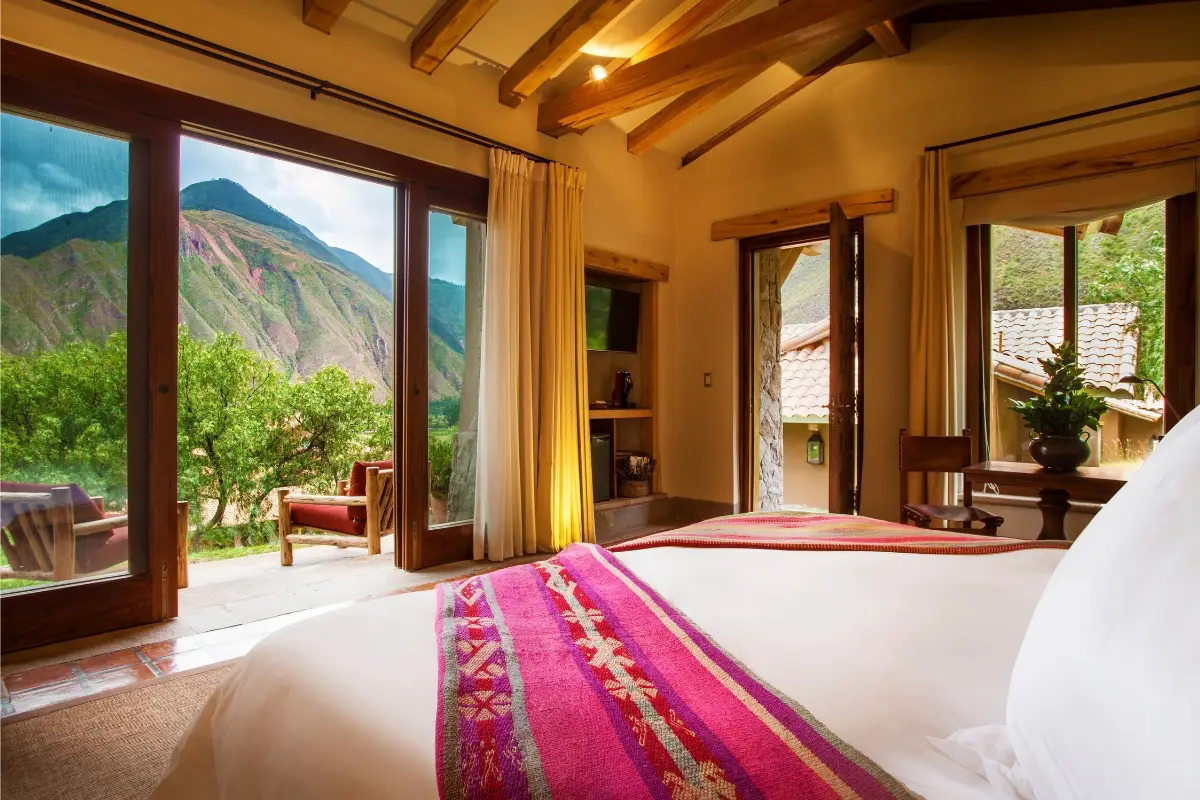
Where it gets specific: Aranwa Sacred Valley’s spa includes aromatherapy oxygen rooms as part of its wellness treatments, which is a different thing entirely from a guest room with piped-in oxygen, and worth not confusing when you are comparing properties.
If an in-room system specifically is what you are after, ask the hotel directly rather than relying on a general “five-star hotels have oxygen” claim, since that is accurate at the level of “oxygen is available somewhere on the property” more consistently than it is at the level of “it is built into your room”.
We checked three of the Sacred Valley’s best-known five-star names directly, Tambo del Inka, Hotel Sol y Luna and Belmond Hotel Rio Sagrado, and none of them advertise an in-room oxygen system the way the Cusco hotels above do. That does not mean oxygen is not available if you need it, since front-desk tanks are standard practice at this level of property, but it does mean you should not assume a piped-in system exists at a Sacred Valley five-star just because it is five stars.
If your hotel does not offer in-room oxygen, or you are staying somewhere that does not make it a priority, there are other ways to get the same short-term relief.
OxyShot and similar pharmacy canisters. Small 8-litre oxygen canisters, sold openly in pharmacies throughout Cusco and around Machu Picchu Pueblo, at roughly S/45 (about US$16) each. No prescription needed, and they are genuinely convenient for a quick boost during the day, at a viewpoint or after a flight of stairs, rather than as an overnight solution. Treat the marketing claims around these products with some scepticism: they provide a short subjective lift, but there is no strong evidence they meaningfully raise blood oxygen saturation the way an in-room system running for hours can.
Portable oxygen concentrator rental or in-home delivery. Cusco has medical services that rent portable oxygen concentrators or deliver oxygen support directly to your accommodation, with 24/7 availability. This is a more serious option than a pharmacy canister, worth knowing about specifically if you have a heart or lung condition and want a plan in place before symptoms start rather than after.
Acetazolamide (Diamox). A prescription medication that speeds the acclimatization process itself rather than just relieving symptoms, available over the counter at Cusco pharmacies but best discussed with your own doctor before the trip, particularly if you are on blood pressure medication.
None of these replace the Sacred-Valley-first sequence either. They are tools for managing symptoms while your body does the actual work of adapting.
This is the part where older content is actively misleading. Some older sources cite oxygenated rooms as a paid upgrade, historically around $20 per night at certain Cusco hotels. That figure shows up repeatedly in older travel forum threads, and it may still apply at some properties.
The current picture at several of the hotels above looks different. JW Marriott El Convento Cusco now lists daily in-room oxygen as included in a number of its standard rate packages rather than a separate line item, and Casa Andina Premium Cusco offers it in all rooms on request without describing a surcharge.
This looks like a genuine shift, with oxygen-enriched air moving from a premium upsell toward a standard amenity at hotels positioned for the international traveler market, rather than a fee attached to a special room category.
The practical advice: do not assume a fixed price either way. Confirm directly with the hotel or your booking agent whether the oxygen system is included in your room rate, tied to a specific room category with its own price, or an add-on, since this varies by property and can change season to season.
If it is included in the room rate or available at no extra charge, as it now is at several of the hotels above, there is little reason not to request it. It is a reasonable comfort measure for anyone, particularly for the first night or two while your body starts adjusting.
If it comes with a real surcharge, the calculation is more personal. For most healthy travelers with normal mobility, the Sacred-Valley-first sequence, hydration, a light first day and avoiding alcohol does more for preventing genuine altitude sickness than an oxygenated room does, and costs nothing extra. An oxygenated room is a sleep-quality upgrade layered on top of that, not a replacement for it.
Where we would actively recommend prioritizing it, on your own doctor’s advice: travelers who are older, who have a heart or lung condition, or who have had a rough time with altitude on a previous trip. In those cases the measured benefit to sleep and daytime alertness is worth more, and it is exactly the kind of detail worth flagging when you are planning the trip rather than discovering at check-in.
Planning where to stay for the altitude, not just the view? This is a genuinely useful thing to get right before you book, and it is exactly the kind of detail our on-the-ground Cusco team sorts out as part of building your itinerary, alongside the Sacred Valley sequencing that matters more than any single hotel amenity. Explore our 8-day classic Peru tour for seniors or contact us and tell us about any health considerations that should shape where we place you.
An oxygenated hotel room has a system that pumps supplemental oxygen into the room’s air, raising the oxygen concentration above the level in the rest of the building or the city outside. This is different from a portable oxygen tank kept at the front desk, which almost every hotel in Cusco has regardless of room type, and which is brought to a room only if needed rather than running continuously.
No. They relieve symptoms and improve sleep quality while you are using them, but they do not replace the physiological acclimatization your body needs, which happens on its own timeline regardless of the air in your room. The most effective prevention is still spending time at the Sacred Valley’s lower altitude before sleeping at Cusco’s full elevation.
JW Marriott El Convento Cusco, Belmond Hotel Monasterio, Palacio Nazarenas, Aranwa Cusco Boutique Hotel and Casa Andina Premium Cusco all currently offer oxygen-enriched rooms, though the details vary by property. JW Marriott includes it as standard across all 153 rooms, while others offer it as a specific room category or on request, so it is worth confirming exactly what you are booking.
Pricing varies and has genuinely shifted over the past decade: older sources cite a roughly $20 per night surcharge, but several hotels now include in-room oxygen in the standard rate or offer it on request at no extra charge. Confirm directly with the hotel or your booking agent rather than assuming either figure applies.
Front-desk oxygen for guests who need it is close to universal at upscale Sacred Valley properties, but oxygen piped directly into guest rooms is less consistently confirmed than in Cusco hotels. The Sacred Valley sits at a lower altitude than Cusco to begin with, which likely explains why in-room systems are advertised less often here.
Yes, more so than for most other travelers, particularly on a doctor’s advice for anyone with a heart or lung condition, since the measured benefit to sleep quality and daytime alertness matters more when altitude is already a bigger risk factor. It is worth flagging as a preference when booking rather than discovering the option only at check-in.
Yes. Nearly every hotel in Cusco keeps portable oxygen tanks on hand for guests who develop altitude symptoms, regardless of whether the room itself has a piped-in system. This is a standard emergency measure at hotels across the city, not exclusive to properties marketed as having oxygenated rooms.
It is a reasonable tiebreaker between similar options, but not a reason to override a better-located or better-value hotel, since the Sacred Valley sequencing does more for preventing altitude sickness than any single room amenity. If altitude is a genuine health concern rather than a general worry, that is worth discussing with your doctor and factoring into where you stay.
Small pharmacy oxygen canisters, sold as OxyShot and similar brands throughout Cusco for around S/45 (US$16), offer a quick boost, and portable oxygen concentrator rental or in-home delivery services are available for a more serious need. Neither replaces genuine acclimatization, but both are reasonable backups if your hotel does not offer an in-room system.
Based on what is publicly confirmed, yes: none of the Sacred Valley’s best-known five-star properties, including Tambo del Inka, Hotel Sol y Luna and Belmond Hotel Rio Sagrado, advertise an in-room oxygen system the way several Cusco hotels do. This likely reflects the Sacred Valley’s genuinely lower altitude rather than a gap in quality, but front-desk oxygen is still standard practice if you need it.
The room itself is one small piece of a trip that is mostly decided by the itinerary sequence around it. If altitude is a real concern for your trip, whether because of age, a health condition or a rough experience last time, tell us and we will build the route, and the hotel choices inside it, around that rather than around a checklist.

