

Is Peru Safe?
- 26 April, 2026
- by Konsti Sobon
Peru is generally safe for visitors as long as you stay alert: hide valuables, use official taxis, keep cash minimal, and pick secure lodging.
Read more

The stunning colonial city of Arequipa, sometimes referred to as the “White City,” is situated in southern Peru and surrounded by volcanoes and picturesque scenery. The Colca Canyon, one of the world’s deepest canyons and a must-see attraction in Peru, is only a few hours away.
The drive from Arequipa to Colca Canyon is a highlight if you’re planning a trip to Peru. You’ll get a look at the area’s rich cultural history, including the way of life of the indigenous groups that call the area home, alongside the scenery of the canyon itself.
This guide takes you through a trip from Arequipa to Colca Canyon, highlighting the sights along the way and offering advice on how to make the most of your visit. From spotting the Andean condor to relaxing in natural hot springs, here’s why combining Arequipa and Colca Canyon is worth building into your Peru itinerary.
If you’d rather see Colca as part of a longer trip, our 13-day Peru Grand Tour spends 2 days in the canyon, with a stop at Cruz del Cóndor, before continuing to Lake Titicaca and Machu Picchu.
A short distance from the city of Arequipa in southern Peru is the natural wonder known as the Colca Canyon. It’s one of the deepest canyons in the world: measurements vary depending on the exact point along the canyon, but most sources place its depth somewhere between roughly 3,270 m (10,730 ft) and over 4,000 m (13,000+ ft) at its deepest, at least twice as deep as the Grand Canyon in the United States.
The Colca Canyon is well-known for its impressive depth, but it’s also home to a vibrant cultural history and an incredible array of flora and animals. Traditional indigenous groups, including the Collagua and Cabana people, live in the area and have followed their ancestral traditions here for thousands of years.
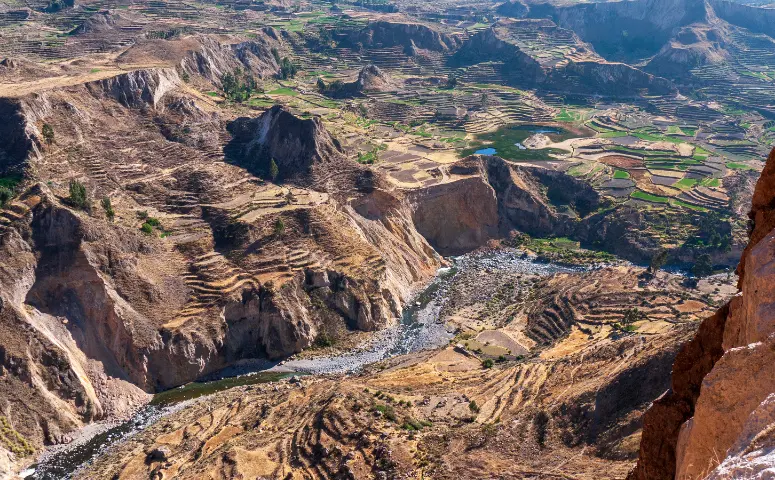
The Colca Canyon is culturally significant, and it’s also a paradise for those who enjoy the outdoors. The Andean condor, one of the most unique birds in Peru and one of the biggest flying birds in the world, calls the canyon home.
You may experience the majesty of these birds as they glide through the canyon, an unforgettable sight.

Colca Canyon has typical Andean and high-altitude weather for Peru, with a wet summer and a dry winter, and periods of transition in between.
The wet season runs from December to March, with frequent, usually brief rain and cloudy skies. Temperatures during this period range from 50°F to 60°F (10°C to 15°C) at night and 60°F to 80°F (15°C to 27°C) during the day.
The dry season, from May to November, is the best window for warm temperatures and clear skies. At this time of year, expect daytime highs of 50°F to 70°F (10°C to 21°C) and nighttime lows near 32°F (0°C).
The dry season is more comfortable temperature-wise, but it’s also the busiest travel period, so expect more crowds and higher prices. The wet season can bring occasional road closures and muddy trails, but it’s quieter and generally more affordable.
Pack for the season you’re traveling in, and you’ll be ready for whatever the weather brings.
Driving from Arequipa to the town of Chivay, 100 miles (160 km) away, takes roughly 3 to 4 hours by car, and often longer by public bus. The traditional bus route from Arequipa runs to Chivay, so check in advance if you need service that continues further into the canyon toward Cabanaconde.
The route from Arequipa to Colca crosses highland scenery and the Salinas and Aguada Blanca National Reserve. Along the way, you’ll pass volcanoes, high-altitude views, and herds of vicuñas near the road as you cross the Patapampa Pass.

It’s worth considering the area’s climate and terrain when packing for a trip to Colca Canyon. Here’s what to think about bringing:
In general, comfort and practicality come first when packing for Colca Canyon. Prepare for the region’s varied weather and terrain, and don’t forget the basics: water, sunscreen, and bug repellent.
The drive from Arequipa to Colca Canyon is a beautiful excursion with stunning Andean scenery. Take the opportunity to sit back and enjoy the surroundings.

The trip offers a look at the area’s culture and history as it passes through high-altitude fields, winding mountain routes, and Andean towns. Pack a camera for the views, and consider motion sickness medication if you’re prone to it on winding roads.
This is the first stop on most tours from Arequipa to Colca. Here, you can see typical wetlands, vicuñas, and a volcano in the background.
Patapampa Pass (4,910 m, 16,108 ft) is the highest point on the route to Colca Canyon, surrounded by the peaks of three volcanoes: Ampato, Sabancaya, and Hualca-Hualca.
Also known as Mirador de Chivay, this viewpoint offers a panoramic view of the Colca Valley and the Andes. It’s a strong place to take in the area’s scale as you enter the canyon.
Pampa de Toccra (or Toccra Pampas) is known for its high-altitude wetlands and a variety of bird species, including flamingos. Llamas and alpacas dot the colorful landscape here.

Given the area’s high altitude, you may experience altitude sickness on the way to Colca Canyon. Symptoms like headache, nausea, fatigue, and shortness of breath can appear above roughly 2,500 m (8,200 ft), and the Patapampa Pass sits well beyond that threshold.
Giving your body time to adjust and avoiding strenuous activity for the first day or two helps with acclimatization. Staying hydrated and skipping alcohol also helps with symptoms.
Seek medical attention right away if symptoms persist or worsen. See our guide on how to avoid altitude sickness to prepare properly for your trip to Colca.

The canyon’s rocky walls and rushing river make for a dramatic backdrop as you explore the various activities on offer.
The Cruz del Condor viewpoint, where you can see Andean condors flying through the canyon, is one of the most popular stops in Colca Canyon, and a real highlight for anyone interested in birds or nature.
The natural hot springs are another well-liked attraction, a great way to relax after a day of hiking or touring. These open-air pools offer views of the surroundings and a genuinely relaxing experience.
Colca Canyon is also home to archaeological sites, including the Uyo Uyo ruins and the Maca church, for travelers interested in history and culture. These spots give you a look at the area’s historical and cultural legacy.
Colca Canyon offers hiking, mountain biking, cultural excursions, and hot springs. These experiences are available on our 16-day Peru tour.
If you’re deciding how much time to set aside for Colca Canyon, here’s how the two most common trip lengths compare:
| Factor | One-Day Trip | Two-Day Trip |
| Pace | Very early start, long day, condor viewpoint and back to Arequipa the same day | Relaxed, with an overnight stay in Chivay or a nearby village |
| Acclimatization | Minimal time to adjust to the altitude | More time to acclimate before and after the highest points |
| Hot springs | Usually skipped or rushed | Time for a proper soak in the evening |
| Village visits | Limited to quick photo stops | More time in towns like Yanque or Chivay |
| Hiking | Not realistic beyond short walks at viewpoints | Room for a short hike into the canyon, if desired |
| Best for | Travelers with limited time who mainly want the condor viewpoint | Travelers who want a fuller, less rushed experience |
Neither option is wrong. A one-day trip covers the highlights efficiently if your schedule is tight, while two days gives your body more time to adjust and leaves room to actually enjoy the villages and hot springs rather than rushing past them.
Colca Canyon is an incredible natural wonder that offers a genuinely unique experience. There’s something here for everyone, from Andean condors soaring overhead to local culture and scenic hiking trails. If you’d like to learn more, read our full guide to everything you need to know about Peru’s Colca Canyon.
Arequipa and Colca Canyon can be added to any of our Peru tours. For more information, feel free to contact us or email us at [email protected].
You can travel from Arequipa to Colca Canyon by guided tour, private transfer, or public bus. Guided tours are the most common choice, since they include transport, a guide, and stops at viewpoints and villages. Private transfers offer more comfort and flexibility, at a higher cost. Public buses are the cheapest option and usually run to Chivay or Cabanaconde, where you can continue by local transport or on foot into the canyon.
The drive from Arequipa to the main Colca Canyon area usually takes about 3 to 4 hours one way, depending on road conditions, stops, and whether you’re heading to Chivay, Yanque, or Cabanaconde. Many tours add time for viewpoints and wildlife stops, so a day trip often runs from very early morning until late afternoon or evening. A two-day tour or longer spreads the driving out and feels less rushed.
A day trip is enough to see the main viewpoints, including popular condor lookouts, and get a feel for the canyon. It works well with limited time in Peru. A two-day trip offers a better pace, time to visit local villages, and room for hot springs or a short hike. If you want to hike deeper into the canyon or stay in lodges at the bottom, plan on at least two to three days.
Condors are most active in the morning, when rising air currents help them glide. Many tours from Arequipa leave very early to reach the main viewpoints between about 8 a.m. and 10 a.m., the window that generally gives the best chance of a sighting. Weather affects sightings, so there’s never a guarantee, but morning arrival meaningfully improves your odds.
The route from Arequipa to Colca Canyon crosses high passes well above 4,000 meters, significantly higher than Arequipa itself. Some travelers feel mild altitude symptoms like headache or shortness of breath. Drinking plenty of water, avoiding alcohol, eating light meals, and moving at a slower pace during stops all help. If you have a history of altitude problems or a heart or lung condition, talk with a doctor before the trip.

Debbie17 August, 2024 at 6:12 pm
Did you have any difficulty driving yourselves?
We are an adventuresome foursome who are over 70 and considering the drive.
Thanks for any input.
Debbie
Morgan27 June, 2023 at 12:35 pm
Sounds interesting, but I am currently debating whether to visit Arequipa or the Amazon Jungle. I will not have time for both destinations, what would you suggest?
Konsti from Exploor Peru29 June, 2023 at 12:52 am
Hi Morgan,
thank you very much for your comment. I personally would highly recommend the Amazon Jungle as you have not experienced a place like this before. The flora, fauna and learning more about the local tribes and way of life is truly unique.
Check out our 3 day Iquitos tour to learn more about the different destinations you will visit.
Best,
Konsti