

Amazon vs. Andes: Which Region of Peru Is Right for You?
- 22 October, 2026
- by Oliver Eberlein
The blog contrasts Peru’s Andes for history and high-altitude culture vs. the Amazon’s wild biodiversity and river life.
Read more

Peru is a country where the past isn’t forgotten, it’s part of daily life. From ancient ruins nestled in the Andes to colonial-era streets in Lima, every place you visit tells a story.
It all began with Caral, the oldest known civilization in the Americas, dating back over 5,000 years. Over time, cultures like the Chavín, Moche, Nazca, and the powerful Inca Empire shaped the region with their innovations in architecture, agriculture, and art.
The arrival of the Spanish in the 16th century introduced dramatic changes, blending indigenous and European traditions into the diverse identity Peru holds today. In 2021, the nation celebrated its Bicentennial, marking 200 years of independence and cultural resilience.
At Exploor Peru, we bring this timeline to life. Whether you’re walking through ancient temples or exploring vibrant cities, our trips are designed to connect you with the heart of Peru’s history, up close and in unforgettable ways.

Before the Incas, before Machu Picchu, there was Caral.
Located in a desert valley just a few hours from Lima, Caral is the oldest known civilization in the Americas, dating back over 5,000 years. With massive pyramids, plazas, and a surprisingly advanced city layout, this peaceful society thrived through trade, agriculture, and innovation, without metal tools or written language.
Walking through Caral feels like stepping into the roots of Peruvian history. It’s proof that Peru’s legacy of ingenuity and cultural depth runs far deeper than most travelers expect and it’s only just beginning to be uncovered.
Our local travel experts can help you add unique places like this to your customized Peru tours.

Following Caral, a wave of advanced cultures began shaping the Andean world. Around 900 BCE, the Chavín emerged with stone temples and mysterious religious iconography that influenced distant regions.
Later, the Moche, based along Peru’s northern coast, engineered vast adobe pyramids and crafted detailed pottery that tells stories of gods, ceremonies, and daily life. Meanwhile, the Nazca etched massive geoglyphs into the desert, so large they can only be fully seen from the sky.
Though each developed independently, these cultures laid the foundation for Peru’s complex cultural heritage. The Moche were master builders and storytellers, the Nazca had a profound connection to the land and cosmos, and the Chavín offered a spiritual and artistic vision that endured for centuries.
Together, they show that Peru’s history wasn’t defined by a single empire, but by a tapestry of civilizations, each contributing to the rich mosaic that existed long before the Incas rose to power.

Rising in the 13th century, the Inca Empire became the largest and most advanced civilization in pre-Columbian America.
With Cusco as its capital, the Incas built an extraordinary network of roads, suspension bridges, and stone cities that stretched across Peru, Ecuador, Bolivia, Chile, and Argentina. Their crown jewel, Machu Picchu, sits high in the Andes, an architectural marvel crafted with perfectly fitted stones, without a drop of mortar.
But the Incas were more than master builders. They developed a sophisticated political system, recorded information using quipus (knotted cords), and created advanced agricultural techniques to farm in harsh Andean terrain. Their deep respect for nature and belief in harmony with the environment helped them thrive across diverse climates, from high-altitude plains to coastal deserts.
Though their empire lasted just a few centuries, the Incas left a lasting imprint on Peruvian identity. Today, their influence can still be seen in traditions, engineering, and the enduring spirit of the Andes.
If you are looking for a journey blending history, culture and breathtaking landscapes, then you should join our 8-day authentic Peru tour!

The arrival of the Spanish in the 16th century marked a turning point in Peru’s history. Led by Francisco Pizarro, the conquistadors captured Inca emperor Atahualpa and swiftly dismantled the empire.
Armed with steel, horses, and diseases unfamiliar to the Andes, they established colonial rule and introduced European systems of religion, governance, and economy. Many Inca temples were replaced by churches, and Spanish became the dominant language.
But from this difficult chapter emerged a powerful cultural blend. Indigenous traditions merged with Spanish influences to create something entirely new, reflected in Baroque architecture, vibrant festivals, and the continued use of Quechua alongside Spanish. Despite immense hardship, people preserved their roots while adapting to change.
The result? A uniquely Peruvian identity forged through both resilience and reinvention, one that still defines the country today.
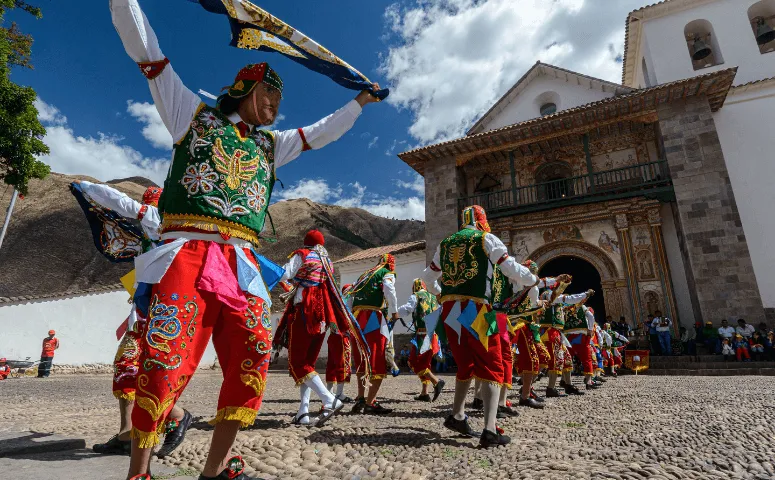
By the late 1700s, a growing wave of resistance was sweeping across Latin America and Peru was right at the heart of it.
Inspired by Enlightenment ideals and movements abroad, indigenous leaders and Creole elites began challenging Spanish rule. Though early uprisings, like those led by Túpac Amaru II, were ultimately suppressed, they awakened a powerful sense of national identity.
After decades of struggle, José de San Martín and Simón Bolívar led the final push for liberation, and on July 28, 1821, Peru declared its independence. But freedom wasn’t the end of the fight, it was the beginning of a new journey.
The young republic faced political instability and economic hardship, yet the people remained united by a shared vision of justice, equality, and cultural pride. Independence became more than a political milestone, it became a symbol of hope and a reclaiming of Peru’s rich cultural identity, which continues to shape the nation to this day.

In 2021, Peru celebrated its Bicentennial, marking 200 years since gaining independence from Spanish rule.
It was a moment to reflect on the country’s evolution, from political shifts and social movements to cultural achievements and economic growth. Today, Peru is known not only for Machu Picchu, but also for its world-renowned cuisine, breathtaking biodiversity, and the vibrant traditions that continue to thrive across the country.
Modern Peru is a dynamic blend of past and present. Cities like Lima, Arequipa, and Cusco showcase this harmony, where ancient roots meet contemporary life. For travelers looking to experience Peru’s living history, Exploor Peru’s customized tours bring it all together, from the ruins of Caral to colorful modern-day celebrations.
Peru’s history is a living journey, one that begins with the ancient city of Caral, rises with the Inca Empire, weaves through colonial transformation, and continues today in a nation full of color, culture, and pride. Each chapter is rich with lessons, legends, and human creativity that still shape life across the Andes and beyond.
Exploring Peru means more than ticking off sites, it’s about walking through time. From sacred ruins to buzzing cities, every step uncovers stories of resilience and wonder.
Ready to experience it for yourself? With Exploor Peru, you won’t just visit, you’ll connect. Our thoughtfully designed travel packages dive deep into Peru’s past and present, offering authentic experiences that stay with you long after your trip ends.
Contact us and let’s start planning your journey today, Peru’s story is waiting.
Caral is the oldest known civilization in the Americas, over 5,000 years old. It sits in a desert valley a few hours from Lima and features pyramids, plazas, and a planned city layout built without metal tools or writing.
The Chavín influenced religion and art across regions starting around 900 BCE. The Moche built large adobe pyramids and made detailed pottery. The Nazca created giant geoglyphs visible from the sky. Together, these cultures set key social, artistic, and engineering foundations.
The Inca built a vast road network, suspension bridges, and stone cities across the Andes, with Cusco as the capital. They used quipus to record information and developed terraces to farm tough mountain terrain. Machu Picchu is a prime example of their engineering skill.
In the 16th century, Spanish forces led by Francisco Pizarro captured Atahualpa and ended Inca rule. Colonial systems replaced many Inca structures, churches rose over temples, and Spanish spread widely. Over time, Indigenous and Spanish traditions blended into Peru’s unique identity.
Peru declared independence on July 28, 1821, after movements led by José de San Martín and Simón Bolívar. The Bicentennial in 2021 marked 200 years of independence and invited reflection on Peru’s political, cultural, and social growth.


Roberto Angelini3 September, 2025 at 6:15 pm
Qué artículo tan fascinante! Me emociona muchísimo descubrir historias menos conocidas que van más allá del clásico Machu Picchu. La forma en que describen civilizaciones como Caral y las culturas pre-incaicas me hace desear planear un viaje para explorarlas en persona. Podrías recomendar algunos sitios arqueológicos del norte de Perú que no estén tan concurridos pero que ofrezcan esa misma conexión con la historia milenaria? Saludos
Konsti from Exploor Peru6 September, 2025 at 9:09 am
¡Qué lindo leer tu entusiasmo!
Además de Machu Picchu y las culturas del sur andino, el norte de Perú guarda verdaderos tesoros arqueológicos que sorprenden por su antigüedad y autenticidad, y muchos de ellos son poco visitados:
Señor de Sipán (Huaca Rajada, Lambayeque): Una de las tumbas más importantes de América, descubierta intacta, que revela el esplendor de la cultura Moche.
Museo Tumbas Reales de Sipán (Lambayeque): Impresionante museo moderno que exhibe los tesoros hallados en la tumba del Señor de Sipán.
Chan Chan (Trujillo): La ciudad de adobe más grande del mundo y capital del reino Chimú, declarada Patrimonio de la Humanidad.
El Brujo y la Señora de Cao (La Libertad): Aquí se encontró a la primera gobernante mujer de la época preincaica, con murales en colores vivos.
Kuelap (Amazonas): Una fortaleza monumental construida por los Chachapoyas, a menudo llamada “el Machu Picchu del norte”, pero con mucha menos afluencia de turistas.
Caral (Supe): Aunque más al centro-norte, es la civilización más antigua de América, con más de 5,000 años de historia.
Si buscas conexión con la historia milenaria sin las multitudes, el norte definitivamente es una joya.