


Peru Packing List 2026 – What to Pack for a Trip to Peru?
- 16 July, 2026
- by Erik Krause
What to actually bring - and what to leave at home. A practical list built for Peru’s wildly varied climate.
Read more
Do you know that slight undercurrent of anxiety when you touch down in a foreign country, your mobile data cuts out, and you suddenly realize you are entirely dependent on patchy public Wi-Fi networks at airport lounges, coffee shops, or your hotel lobby?
While disappearing off the grid for a few days into the pristine Andean wilderness sounds romantic in theory, the reality of travel requires coordination. Whether you need to summon a secure ride-hailing app on the streets of Lima, navigate winding cobblestone tracks via offline maps in the Sacred Valley, keep your family updated on your whereabouts, or instantly upload an incredible snapshot from your Peru tour, having reliable internet is a genuine help.
Staying connected in Peru is achievable, but the rules have shifted. Here is what you need to know about navigating the local cellular landscape cleanly, safely, and efficiently.
Before you secure a local data line or download an eSIM profile, run through a quick check. Make sure your phone meets these two baseline requirements:
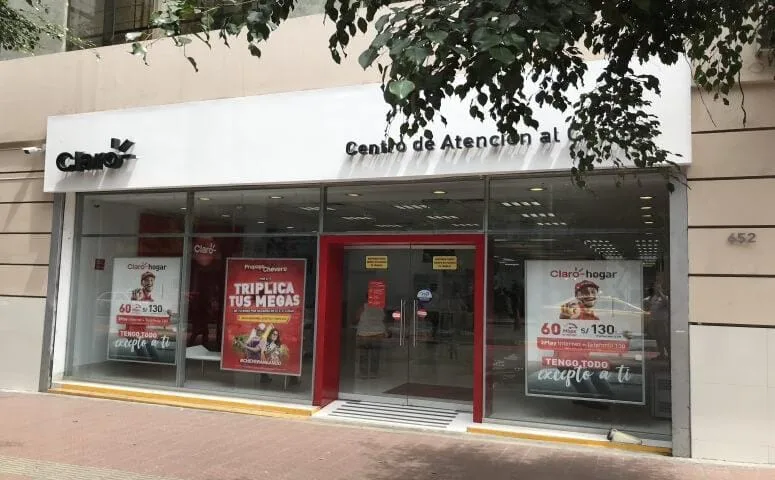
Based on real-world travel experience across Lima’s coastline and the high-altitude trails of the Andes, Claro remains our recommendation for physical network connectivity in Peru.
(Note: there is no financial affiliation or sponsorship between Exploor Peru and Claro; this is direct advice based on coverage.)

Now, let’s look at the exact steps to buy a SIM card in Peru (the steps are the same whether you’re in Lima or Cusco).
Whether you’re in Lima or Cusco, the official registration process is the same.
Instead of texting activation codes, you add a soles balance and activate a Plan Prepagado or Crece tu Recarga package through the Mi Claro app or with the clerk:
| Data Package | Cost (Soles) | Data | Validity | Included Perks |
| Prepagado 7 | S/ 7.00 (~$1.90) | 7 GB | 30 days | Unlimited WhatsApp and basic social data, unlimited domestic calls |
| Prepagado 10 | S/ 10.00 (~$2.70) | 10 GB | 30 days | Unlimited social data, unlimited domestic calls and SMS |
| Plan Prepagado 20 | S/ 20.00 (~$5.40) | 6 GB | 30 days | Unlimited WhatsApp/Facebook/Instagram data, 500 national minutes |
| Plan Prepagado 30 | S/ 30.00 (~$8.10) | 10 GB | 30 days | Unlimited social media data, unlimited national calls and SMS |
These are approximate rates and can shift, so confirm current pricing with the carrier when you register. Prepagado 30 is a reasonable request for a standard two-to-three-week trip: enough high-speed data for navigation, translation, and sharing photos.
The digital alternative (skip the store entirely). If you’d rather avoid queues and biometric checks at storefronts, an international eSIM from a provider like Maya.net or Airalo can be purchased and set up before you leave home. When your flight lands in Peru, your phone connects to local towers automatically. You can check out this option here.
Once your Peruvian SIM is registered and in your phone, keeping the line active is simple. You don’t need to return to a flagship store every time you run low. Top up (recarga) at almost any gas station, supermarket, pharmacy, or neighborhood corner market (bodega) displaying Claro branding.
The process on the street:

Keeping track of remaining data helps you avoid running dry mid-upload.

Peruvian mobile numbers are 9-digit strings, and the country’s international dialing prefix is +51.
Having emergency contacts saved in your phone is a sensible precaution. Here are the primary lines in Peru:
| Emergency Service | Number | Notes |
| National Police (Policía Nacional) | 105 | The primary line to report theft, accidents, or security threats. 911 also connects to police dispatch in most areas, functioning as a secondary option. |
| Medical Ambulance (SAMU) | 106 | The Mobile Emergency Medical Care System, a free public ambulance and urgent-care dispatch service, though coverage and response times vary by area. |
| Fire Department (Bomberos) | 116 | National volunteer fire crews for fires, structural rescues, and hazardous leaks. |
| Civil Defense (INDECI) | 115 | Coordinates responses to natural disasters, mudslides, or seismic activity. |
A note on 911 and 112. Peru is in the process of building a unified emergency dispatch system, but it isn’t fully rolled out nationwide yet. Dialing 911 generally connects you to police dispatch, similar to 105. The European-style 112 does not reliably work in Peru, so don’t count on it; stick to the numbers above, especially 105 and 106, which remain the most consistently staffed lines.
Getting connected in Peru isn’t overly complicated once you understand the local logistics. But is it worth the effort and cost, or should you skip it?
It depends on your travel style. If your goal is a genuine digital detox, disconnecting from work and social media, traveling off-grid can be a great way to experience the Andes. If you’d rather share photos in real time or rely on logistical support on the ground, skipping connectivity can add unnecessary friction.
Peru has solid Wi-Fi infrastructure indoors. Most hotel lobbies, cafés, bars, and restaurants in tourist hubs like Miraflores, Cusco, and Arequipa offer free, reasonably fast internet.
The moment you step onto the street, that safety net disappears.
Relying on stationary Wi-Fi can work if you plan carefully, but active cell data on the street serves three real purposes:
For most visitors, spending $15 to $30 USD on a reliable eSIM or physical tourist plan is a low-cost way to add safety, situational awareness, and peace of mind, letting you focus on the trip itself.
While travelers could once buy a physical prepaid line at any corner store, stricter identity verification rules have narrowed the reliable options to authorized tourist kiosks (like PeruSIM counters) inside the Lima Airport arrivals hall, or official flagship carrier stores in areas like Miraflores or Cusco’s Plaza de Armas.
Peru’s telecom market is led by Claro, Movistar, Entel, and Bitel. For most travelers, Claro offers the deepest, most stable coverage in mountainous Andean corridors and the Sacred Valley. Movistar delivers strong 4G speeds in urban centers, while Entel and Bitel are reasonable alternatives with generally weaker signal once you head into rural or Amazonian areas.
Your original physical passport is required for in-person registration; digital photos, scanned copies, or foreign driver’s licenses are typically not accepted.
The physical SIM itself is inexpensive, typically around 5 soles (about $1.40 USD), with monthly data packages running an additional 7 to 30 soles ($2 to $8 USD) depending on the plan. A pre-registered Tourist SIM bought from an airport reseller kiosk costs more, since you’re paying for the convenience of skipping the in-person process; expect $25 to $35 USD for a bundled package.
Yes, and it’s the option we recommend most. If your phone supports eSIM, buying a digital data profile online from a provider like Airalo, Maya Mobile, or Holafly before you travel avoids the in-person biometric process entirely. You scan an emailed QR code to install the profile, keeping your home SIM active in its slot for verification texts. Your data activates automatically once you land in Peru.


Andreas28 May, 2026 at 11:53 pm
Mir wurde hier in Peru in allen Geschäften gesagt, daß ein Pass nicht mehr ausreicht. Nur die peruanische Ausweisnummer funktioniert. Im vergangenen Jahr konnte ich noch unter falschem Namen eine Karte erwerben, was mir dieses Jahr nicht mehr gelang. Man ist auf öffentliches W-LAN angewiesen.
Nathalie20 March, 2025 at 2:47 am
Hola,
Se puede llamar a Francia y Inglaterra de Peru con las tarjetas SIM de Claro que describes?
Mil gracias
Oliver from Exploor20 March, 2025 at 5:21 pm
Hola,
Sí, con las tarjetas SIM de Claro que mencioné, se puede llamar a Francia e Inglaterra desde Perú. Sin embargo, te recomendaría revisar los planes o tarifas internacionales de Claro para asegurarte de que las llamadas internacionales estén incluidas o conocer los costos exactos. En los paquetes de “Minutos ilimitados” no están incluidas llamadas internacionales.
Saludos!
Saskia14 January, 2025 at 6:56 pm
Hallöchen, vielleicht kannst du mir helfen :
Ich habe letztes Jahr in Ecuador eine Claro Sim Karte gekauft und frage mich, ob ich die auch in Peru benutzen kann?
LG, Saskia
Oliver from Exploor16 January, 2025 at 9:53 am
Hallo Saskia! Die Claro SIM-Karte, die du in Ecuador gekauft hast, sollte auch in Peru funktionieren, da Claro in beiden Ländern aktiv ist. Allerdings könnten zusätzliche Roaming-Gebühren anfallen, da du die Karte außerhalb des ursprünglichen Kauflandes nutzt. Es könnte sich lohnen, direkt bei Claro nachzufragen oder eine lokale SIM-Karte in Peru zu kaufen, um Kosten zu sparen. Die lokale SIM-Karte hier kostet lediglich 5 Soles, also sollte dies kein Problem sein. 🙂
LG aus Lima,
Oliver
Daniela15 September, 2023 at 6:34 am
Hallo, ist es auch möglich eine SIM-Karte für Peru in Deutschland zu kaufen und zu aktivieren??
Oliver from Exploor15 September, 2023 at 12:02 pm
Hey Daniela! Dies haben wir noch nie probiert und demnach glauben wir, dass das nicht möglich ist. Die normalen peruanischen Prepaid Sim Karten von z.b. Claro oder Movistar sind lediglich in Peru zu erhalten.
Viele Grüße,
Oliver
María José25 August, 2023 at 8:25 pm
Llegué a Perú hoy y pregunté en dos operadores (Entel y Bitel) y nos dijeron que solo lo venden con pasaporte o carné extranjería. Yo viaje con mi cédula chilena. ¿Puedo comprar con ese documento en Claro? Porque los otros dos operadores no me quisieron vender
Oliver from Exploor28 August, 2023 at 10:53 am
Hola María José. Normalmente piden pasaporte, DNI peruano o carné extranjería para el registro, en Claro también.
Saludos,
Oliver
Maty maricielo17 August, 2023 at 9:29 am
Es bueno y yo quisiera un chip de 5 soles y
Israel19 June, 2023 at 10:00 am
Buenos días! Es posible comprar un chip SIM en Claro sin tener un DNI? Podré activar un plan sin tener un DNI peruano? Gracias!
Oliver from Exploor19 June, 2023 at 11:32 am
Hola Israel! Si, es posible. Puedes comprar un chip SIM con tu pasaporte o carné extranjería, no hay problema.
Saludos,
Oliver
Patricia4 January, 2023 at 7:40 am
Hola, se puede comprar en el aeropuerto una tarjeta SIM simplemente para tener datos durante 15 días? hay varias tiendas fáciles de encontrar allí sin que tengan que ser de una compañía telefónica?
Gracias
Oliver from Exploor5 January, 2023 at 5:26 pm
Hola Patricia! No estamos seguros si siguen vendiendo esas tarjetas y que tan buenas son. Las tarjetas SIM de CLARO u otra empresa telefónica puedes encontrar en cualquier ciudad en Peru y en verdad la activación es muy fácil. 🙂 Cualquier pregunta adicional nos avisas. Buen viaje!
Carolyn1 January, 2023 at 2:05 pm
I bought a Peru Sim card and would just like to warn everyone, once you’ve bought it, there’s NO customer service whatsoever. No guidance as to who you can or can’t contact and how (it turns out the only way you can communicate with anyone outside of Peru is via whatsapp), no help if you get a text that appears to pertain to your account in a language you can’t read. All you can do is use whatsapp to contact a useless automated “helper” that tells you a human will respond in the chat “in a few minutes” - and wait as the hours go by…
It would have been far easier and cheaper to just have my hotels make the few Peru-internal phone calls I needed to make.
Oliver from Exploor3 January, 2023 at 12:35 pm
Hey Carolyn, thanks for your comment! Sorry to hear you had a bad experience with a Peruvian SIM card for international calls. It’s true what you say, many times the customer service is really bad in these large Peruvian companies. For international calls, I’d rather recommend using Skype as this is really cheap and always works. For national calls, texts and internet data, a Peruvian SIM is sufficient.
All the best for your future travels 🙂
Oliver
Tomasz2 August, 2022 at 12:55 pm
What do you think about eSim cards - what range and coverage they have and whether they support 3G and 2G. I have an iPhone 11 and I could use one internet device with eSim, calls and text messages from my regular card.
Oliver from Exploor3 August, 2022 at 9:05 pm
Hey Tomasz, yeah sure this is also possible. From what I’ve heard most companies work with Claro (the most reliable operator with up to 5G in Lima f.e.) or Movistar. Hope this helps 🙂
Hariram11 December, 2022 at 10:13 am
Are the rates and plans mentioned above still good/correct?
Konsti from Exploor Peru19 December, 2022 at 1:05 am
Hello Hariram,
thanks for your comment and yes, all rates and plans mentioned above are still good.
Best,
Konstantin
gabriele29 July, 2022 at 5:18 pm
euer blog ist echt super und hilfreich! danke für die vielen details - bis hin zu den spanischen fragen👍🏼! zur simkarte habe ich jetzt eine frage: was haltet ihr von der Peru SIM, die von der touristen info u.a. in lima angeboten wird?
Oliver from Exploor29 July, 2022 at 7:56 pm
Vielen Dank für deinen lieben Kommentar, Gabriele. Die Peru SIM ist auch eine gute Option, da sie unbegrenzte Minuten, SMS und ein gutes Datenvolumen (je nach ausgewähltem Plan) anbietet. Außerdem läuft Sie auf dem Claro Netz, was das wohl zuverlässigste in Peru ist. Im direkten Vergleich zu einer Claro SIM ist die Peru SIM etwas teurer. Ich hoffe das hilft dir weiter, ansonsten schreib uns gerne nochmal. Liebe Grüße und eine tolle Zeit in Peru, Oliver
Javier12 June, 2022 at 2:30 pm
Excellent comments and thank you for the recommendations.
Oliver from Exploor12 June, 2022 at 5:39 pm
Hey Javier! Glad it helps, thank you for reading our blog! 🙂
Livia4 September, 2021 at 10:56 am
Quiero una tarjeta SIM