One of the New Seven Wonders of the World, Machu Picchu captivates visitors with its scenery and its history in equal measure.
Three main circuits split into ten routes cover the site, and Circuit 1C, the Sun Gate Intipunku Route, is the one built around a short hike rather than a walk through the ruins themselves. It follows the upper terraces of Circuit 1, then continues to the Sun Gate, Intipunku, for a wide panoramic view over the citadel.
If you’d rather not book the train, bus and entry ticket separately, our Machu Picchu day trip from Cusco includes all 3, plus a private English-speaking guide and hotel pickup in Cusco or the Sacred Valley.
This guide covers what the route actually includes, how long it really takes, when it’s open, and what to confirm before you book.
Key Takeaways
- Circuit 1C combines the upper-terrace walk of Circuit 1 with a hike out to the Sun Gate (Intipunku), the original Inca entrance to the citadel.
- The full route takes about 2.5 to 3 hours round trip, with a maximum stay of up to 4 hours allowed on the ticket.
- It’s open in high season only: June 1 to October 15, and December 30 to 31. Outside those dates, this specific route isn’t sold.
- Circuit 1C does not reach the lower terraces or the main ruins. For those, and for the classic postcard photo, Circuit 2 is the route.
- Daily access is capped and tickets sell out well ahead of the date, especially for dry-season months.
- It’s a gentler hike than it sounds, wide and gradually graded, which is why it’s one of the few Machu Picchu add-on routes open to children.
Why Choose the Sun Gate Intipunku Route?

Circuit 1C is built for travelers who want the classic panoramic view of Machu Picchu plus something more active, without the steep, demanding climb of Machu Picchu Mountain or Huayna Picchu. It follows the hike to Sun Gate Intipunku from the upper terraces out to Intipunku itself, the stone gateway that once controlled entry to the citadel from the Inca Trail.
The walk to the Guardhouse area first gives you the classic elevated photograph, with Huayna Picchu behind the ruins. From there, the trail to Intipunku continues along a wider, gently graded path, passing views over the Vilcanota River and Putucusi Mountain along the way.
One detail worth knowing before you book: if you’re arriving at Machu Picchu via the classic four-day Inca Trail, you already pass through the Sun Gate as your final approach to the citadel. Buying a separate Circuit 1C ticket for the same viewpoint isn’t necessary in that case.
For most other travelers, though, this route is the way to reach a viewpoint otherwise only seen by Inca Trail trekkers, and it’s one of the few Machu Picchu hikes with no age restriction, which makes it a reasonable choice for families who want more than the standard circuit but aren’t ready for Huayna Picchu.
What you actually walk through
The route starts inside Circuit 1, climbing to the Guardhouse area first, the platform where the classic elevated photograph is taken, citadel spread out below with Huayna Picchu rising behind it. From there, instead of descending toward the lower terraces, Circuit 1C continues upward and outward along the old Inca Trail route itself.
The path to the Sun Gate is wider and more gradually graded than it looks from photos, roughly 40 minutes for the upper terrace section and another 1 to 1.5 hours each way to Intipunku, depending on pace. Along the way you get open views down toward the Vilcanota River and across to Putucusi Mountain, with the citadel itself receding below as you climb. Intipunku sits at a genuine high point, roughly 2,720 m (8,924 ft), about 300 m (950 ft) higher than the citadel itself at 2,430 m (7,972 ft), and it’s the same threshold every Inca Trail hiker passes through on their final approach. It’s where the panoramic shot that made this route popular is actually taken.
Circuit 1C compared to the other Circuit 1 add-ons
Circuit 1 has three hiking add-ons beyond the base upper-terrace walk, and they’re easy to confuse when you’re comparing tickets:
| Route | Add-on | Extra time | Difficulty |
| 1D | Inca Bridge | About 30 minutes each way | Easy |
| 1C | Sun Gate (Intipunku) | About 1 to 1.5 hours each way | Moderate |
| 1A | Machu Picchu Mountain | 3 to 4 hours round trip | Hard |
1D is the shortest and easiest, a flat walk to a viewpoint over a section of Inca Trail built into a cliff face, no bridge crossing involved. 1A is the real climb, a steep mountain summit with the best elevated view at Machu Picchu but a serious physical undertaking. 1C sits in the middle: more of a genuine hike than 1D, without the demanding ascent of 1A. None of the three include access to the lower terraces or main ruins, so the choice between them comes down to how much hiking you want layered onto the classic upper-terrace visit, not what else you’ll see once inside.
Photographing the Sun Gate
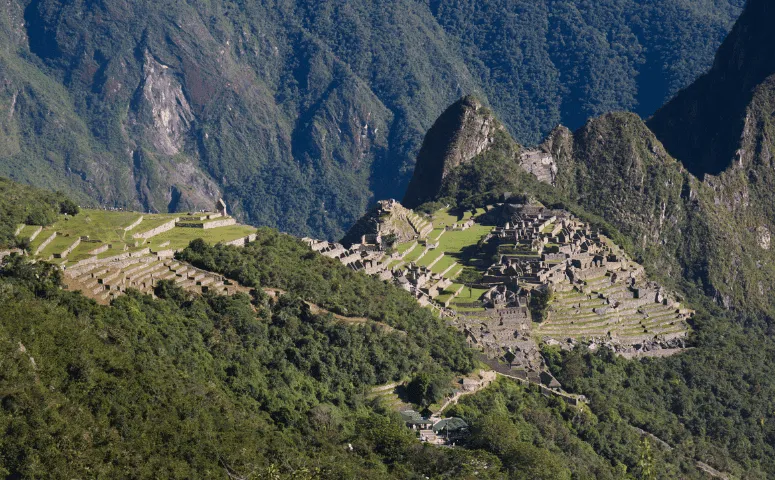
The Guardhouse platform, reached early in the walk, is where most visitors get their single best shot of the citadel with Huayna Picchu behind it, so have the camera ready before you arrive rather than after. Morning light is softer and the mist, when it’s present, tends to move through in minutes rather than settling in for the day, but it’s also the least predictable window. From Intipunku itself, the frame is wider and more distant: the whole valley opens up, with the citadel small in the middle distance, which is a different and less commonly seen image than the standard postcard shot.
The trail is one-way and narrow in places, so the practical rule is the same as anywhere else on the mountain: secure the wide shot first, then the portraits, and step to the side of the path to compose rather than blocking it.
Who Circuit 1C Actually Suits
This route rewards travelers who want to earn the photograph rather than simply walk to it: hikers who enjoy a real trail without wanting a mountain summit, first-time visitors who have the fitness for a few hours of walking but not for Huayna Picchu, and families with older children, since it’s one of the few add-on routes with no minimum age. It’s a poor fit for anyone who wants to see the main ruins in the same visit, or who has limited mobility, since it’s a genuine hike rather than a level walk. If you’d rather have someone sequence the circuit, train and timing around your specific dates, our customized Peru tours handle that end to end.
Physical and Logistical Considerations for Circuit 1C
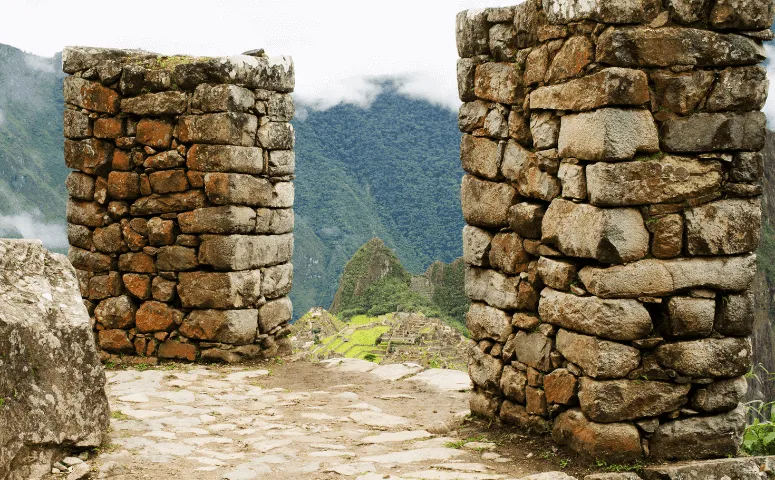
The route is moderate rather than strenuous: a wide, gradually climbing trail with some uneven stone underfoot, but nothing like the exposed stairs of the mountain hikes. Most visitors complete the upper terraces and the walk out to the Sun Gate and back in about 2.5 to 3 hours, and the ticket allows a maximum stay of up to 4 hours if you want to move slowly and enjoy the views. Machu Picchu itself sits at 2,430 m (7,972 ft), and the hike gains a further 300 m (950 ft) to reach Intipunku, so travelers still acclimatizing to altitude should plan for the effort to feel a little harder than the distance alone suggests.
Circuit 1C is only sold during high season: June 1 to October 15, and December 30 to 31. Outside that window, this specific route isn’t available, and travelers visiting at other times of year need to choose a different circuit. Within the open season, morning entry slots are the norm, so confirm the exact times available for your date when you book, since these can shift slightly between seasons.
Weather is part of the planning too: mornings can be foggy, especially earlier in the season, and afternoons warm up quickly once the sun is out. Our guide to Machu Picchu weather breaks down what to expect month by month.
The route’s one real limitation is access: it doesn’t reach the lower terraces, the Temple of the Sun, or the other ground-level structures that make up the bulk of the citadel. If seeing those matters as much as the view does, you’ll want to also book Circuit 2 or Circuit 3, since circuits are one-way and cannot be combined on a single ticket.
Tickets and Permits for Machu Picchu Circuit 1C
Access to Circuit 1C is capped daily, and because it’s only sold during a limited high-season window, demand concentrates hard into those months. Book as far ahead as you can, ideally the moment your travel dates are fixed, rather than waiting until closer to the trip.
Standard adult admission has been published around S/152, roughly US$40, with reduced rates for children ages 3 to 17. Some resellers price this specific route noticeably higher, closer to US$60, as a bundled product that includes the Sun Gate add-on. Confirm the current rate and exactly what’s included for your party before paying, either on the official Ministry of Culture platform or with your operator in writing. If you book your Machu Picchu tour with us, we handle the entrance tickets as part of the booking.
Deciding between the mountain add-ons instead? Read our guide to the differences between Machu Picchu Mountain and Huayna Picchu to see how they compare to the Sun Gate route.
What to Bring for Your Machu Picchu Tour

For a comfortable day on Circuit 1C, pack:
- Sturdy hiking boots or shoes with real traction
- Breathable, lightweight layers
- A poncho or light rain jacket
- Hat and sunglasses
- Sunscreen and insect repellent
- A refillable water bottle
- Snacks: energy bars, trail mix, fruit or nuts
- Any altitude medication you use, discussed with your doctor beforehand
- A small headlamp or flashlight, useful for early entry slots
This covers the essentials. Our full Machu Picchu packing list goes into everything else worth bringing for the day.
Unlock the Magic of Machu Picchu with Circuit 1C
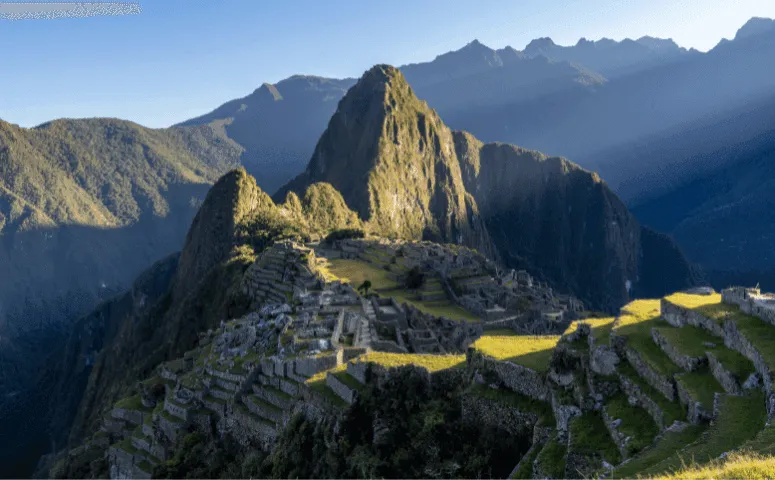
Circuit 1C gives you the classic elevated view of Machu Picchu plus a genuine, walkable hike out to the Sun Gate, without the steep climbing of the mountain routes or the crowds of the lower circuits. It’s a strong choice for travelers who want more than a standard walk through the ruins but aren’t chasing a strenuous summit.
Just remember what it doesn’t include: the lower terraces and main ruins sit on a different circuit entirely, so plan accordingly if both matter to your visit.
Ready to book? Browse our Machu Picchu tours, or contact us and we’ll help you choose the right circuit, or combination of circuits, for what you actually want to see.
Frequently Asked Questions About Machu Picchu Circuit 1C (Sun Gate Intipunku)
How long is the Circuit 1C hike?
Most visitors complete the upper terraces and the hike out to the Sun Gate and back in about 2.5 to 3 hours, and the ticket allows a maximum stay of up to 4 hours. The trail is moderate rather than strenuous, wide and gradually graded, with some uneven stone sections.
What will I see on Circuit 1C, and what’s not included?
You’ll walk the upper terraces for the classic elevated view, then continue to the Sun Gate (Intipunku) for panoramic views over the citadel and surrounding valleys. Circuit 1C does not reach the lower terraces or the main ground-level ruins; for those, and for the classic postcard photo, Circuit 2 is the route to book instead.
When is Circuit 1C open?
Circuit 1C is sold only during high season, June 1 to October 15 and December 30 to 31, and isn’t available outside those dates. Within that window, May through October also brings the driest, clearest weather, though it’s the busiest period too, so book well ahead.
How much do Circuit 1C tickets cost, and how many are available per day?
Standard adult admission is published around S/152 (about US$40), though some resellers price this specific bundled route closer to US$60, so confirm the current rate and exactly what’s included before paying. Daily access is capped, and because the route is only sold during a limited season, demand concentrates hard into those months, so book as early as your dates allow.
Do I need to buy this ticket if I’m hiking the Inca Trail?
No. Travelers arriving via the classic four-day Inca Trail already pass through the Sun Gate as their final approach into Machu Picchu, so a separate Circuit 1C ticket for the same viewpoint isn’t necessary. This ticket is for travelers entering the citadel by train or bus who want to add the hike separately.
Is Circuit 1C suitable for children?
Yes. It’s one of the few Machu Picchu add-on hikes with no age restriction, unlike Huayna Picchu, and the trail itself is wide and gradually graded rather than steep. It’s a reasonable middle ground for families who want more than the standard circuit without the demands of a mountain hike.
Is Circuit 1C harder than the Inca Bridge route (1D) or easier than Machu Picchu Mountain (1A)?
It sits in the middle: 1D to the Inca Bridge is an easy 30-minute walk each way, 1C to the Sun Gate is a moderate 1 to 1.5 hour hike each way, and 1A to Machu Picchu Mountain is a hard 3 to 4 hour round trip climb. None of the three include the lower terraces or main ruins, so the choice comes down to how much hiking you want added to the standard upper-terrace visit.
What should I bring for Circuit 1C?
Sturdy footwear, breathable layers, a rain jacket, sun protection, a refillable water bottle, snacks, and any altitude medication you use are the essentials. A small headlamp is also worth packing if you’re booked on an early entry slot.